


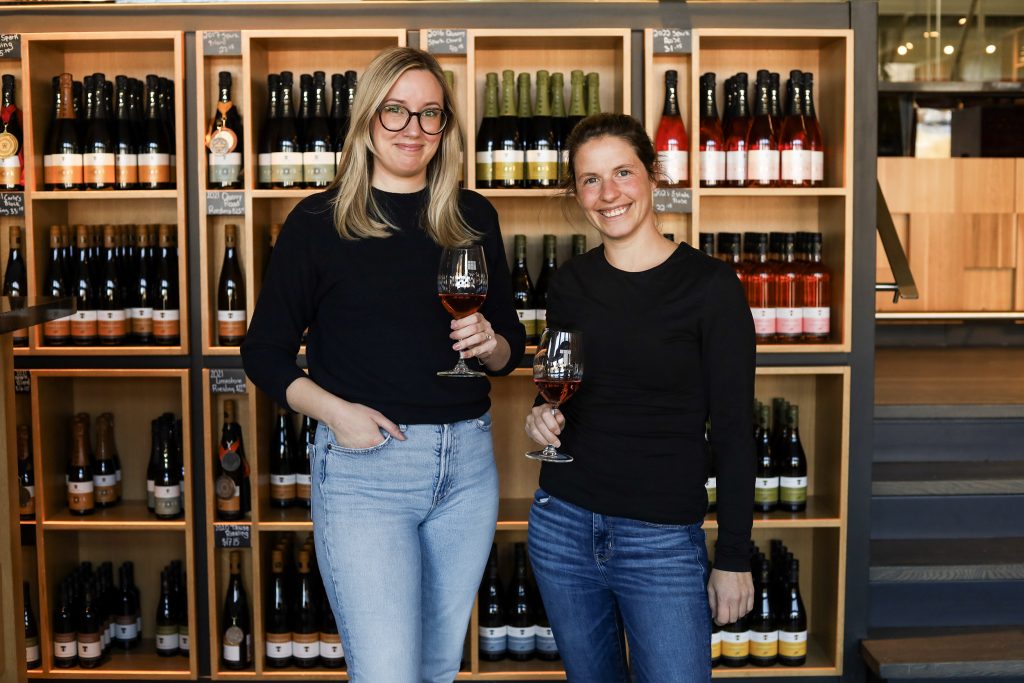
Jess Otting and Augusta Vanmuyen have formed an extraordinary tandem, bringing organic viticulture and exceptional winemaking to new heights at both Tawse and Redstone wineries, in Ontario
It should go without saying that the relationship between the vineyard and the cellar is integral to crafting wines that truly reflect their place and time. At both Tawse Winery and Redstone Winery in Niagara, that relationship thrives under the leadership of winemaker Jess Otting and vineyard manager Augusta Vanmuyen.
Few partnerships in the world of wine are as seamlessly intertwined. The duo’s synergy is evident in every bottle produced. It’s a collaboration built on trust, shared expertise, and a deep respect for the land.
Read Also: Winemaker Q&A: 10 Questions for Katie Dickieson and Nik Antunovich
Both Tawse and Redstone wineries have long been recognized for their commitment to quality, sustainable winemaking. Owned by Moray Tawse, the wineries have championed organic and biodynamic practices for decades, producing wines that reflect the land with minimal intervention.

Tawse Winery, located in Vineland, Ontario.
Tawse Winery, located on the Niagara Escarpment’s Vineland Bench, has set a benchmark for quality since its founding nearly 25 years ago, championing a Burgundian focus with varietals like chardonnay and pinot noir. Redstone Winery, established in 2009, takes a slightly different approach, focusing on fuller-bodied reds suited to its iron-rich clay soil profile at the foot of the escarpment. Despite their unique identities, both wineries share a commitment to crafting wines that honour their sense of place.
Stepping up; moving forward
Jess Otting stepped into her winemaking role at Tawse and Redstone following the untimely passing of Paul Pender, whose legacy still looms large. Rather than feeling pressured to replicate his exact approach, Otting has embraced the opportunity to carry forward his philosophy while bringing her own vision to the wines.
“Paul’s influence is woven into everything I do,” she reflects. “His vision continues to guide me, and much of what I do honours his legacy.” One of the ways Jess honours Paul is by continuing his push for sustainable and minimal-intervention winemaking. “He always believed in letting the vineyard lead the way, and that philosophy is something I carry with me every day. But I’ve also embraced opportunities to infuse my own perspective, finding new ways to push boundaries.”
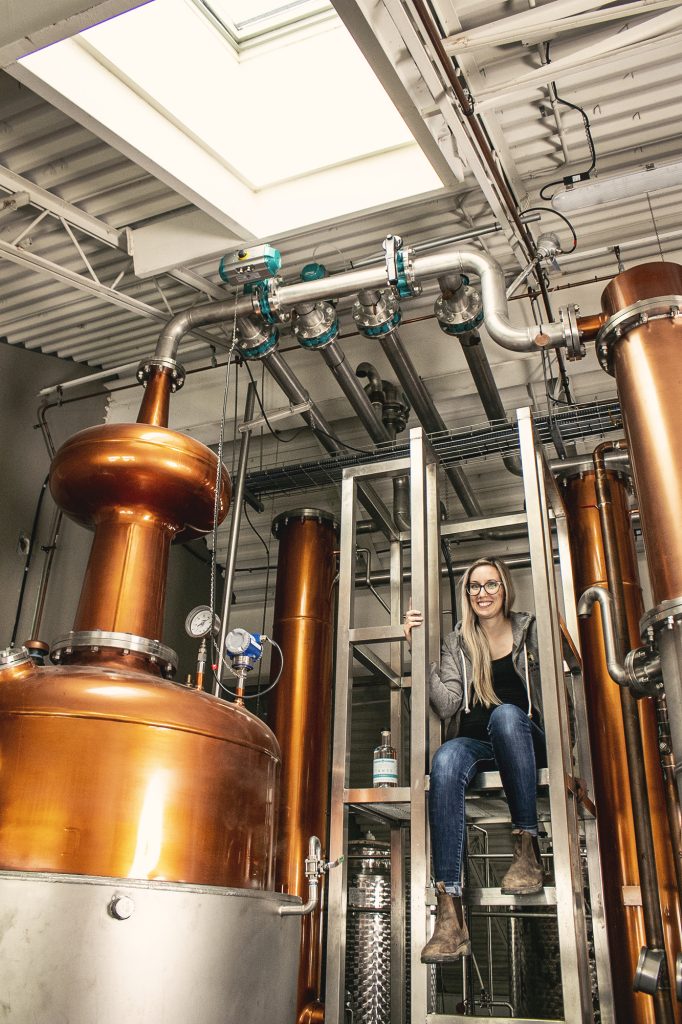
Jess Otting, winemaker at Tawse and Redstone wineries.
One aspect Otting has really focused on making her own is building on each winery’s sparkling wine program. “Somewhere along the line, I fell completely in love with making traditional method sparkling wine,” says Otting. “There’s so much room for creativity, and I have the freedom to experiment with different styles and ages within our sparkling portfolio. It’s a constant source of inspiration.”
Of course, pinot noir and chardonnay are the heart of her winemaking at Tawse, reflecting the unique terroir of the Niagara Escarpment. “They don’t need much winemaking—they tell their own story,” she says. Yet, she has also developed a passion for syrah, a variety she has been working with over the past five vintages. “It’s been an exciting challenge. I didn’t have much experience with it before stepping into my winemaking role, but it’s deeply satisfying to see how syrah thrives and evolves in a cool climate.”
And furthermore, she’s found a love for crafting rosé because, as she puts it, “It’s an art of decision-making. From choosing techniques and varietals to blending and finding balance, rosé allows for endless creativity.”
Beyond varietal expression, Otting is dedicated to working with fruit that reflects its environment as purely as possible. This commitment to authenticity means allowing vintage variation to shine through while ensuring consistency in quality. “Every year is different, and that’s the beauty of winemaking,” she says. “But no matter what, my goal is to craft wines that speak honestly of their origins.”
The vineyard as the foundation
On the viticultural side, Augusta Vanmuyen is the steward of Tawse and Redstone’s organic vineyard practices. Managing vineyards organically in Niagara presents challenges, particularly with disease pressure and the region’s cold winters. Vanmuyen emphasizes the importance of hands-on management: “I spend a lot of time scouting and working the vines to ensure we are on top of everything. Active, hands-on management is key to staying ahead of potential issues.”
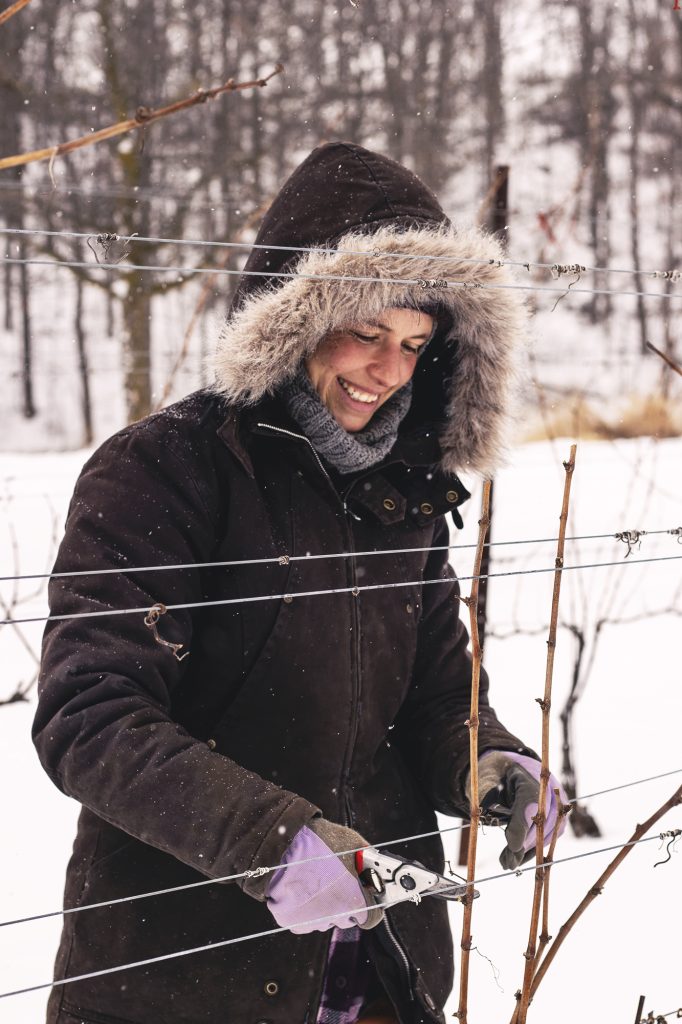
Augusta Vanmuyen, vineyard manager at Tawse and Redstone wineries.
Proper canopy management is essential, with techniques such as shoot thinning, tucking, and leaf removal playing a major role in reducing disease pressure. “These practices help manage airflow, reduce moisture buildup, and ensure the grapes receive the right amount of sunlight,” Vanmuyen explains. “They are labour-intensive but crucial to achieving high-quality fruit.”
Sustainability is at the core of her approach. At both wineries, she focuses on improving soil health, increasing biodiversity, and reducing tillage to allow the land to express itself naturally. “The soils across our vineyard sites are incredibly diverse, and we want that uniqueness to shine through in the wines,” she says. “Reducing tillage and fostering biodiversity not only allows the vines to better reflect their terroir, it also protects soil integrity, improves water retention, and encourages healthier root systems,” Vanmuyen explains.
Ultimately, it’s the synergy between Otting and Vanmuyen that is crucial to maintaining those distinct identities of Tawse and Redstone. Vanmuyen ensures that vineyard practices align with Otting’s winemaking vision, tailoring specific blocks to what they produce best.
Their collaboration extends to harvest decisions, a critical and often high-stakes moment in the winemaking process. “It’s one of the most exciting (and nerve-wracking) parts of the year,” says Otting. “Augusta has an incredible sense of what’s happening in the vineyard, so we start with her observations and tasting the fruit together. We look at all the factors—data, taste, and the feel of the fruit—and aim for a harmonious result that’s true to the site.”
A vision for the future
Over the years, vineyard management has evolved significantly, with an increased focus on sustainability and data-driven practices. “Traditional farming methods have given way to more refined, environmentally conscious approaches,” Vanmuyen notes. “There’s a much stronger emphasis on reducing our impact on the land.”
This industry trend of pushing toward sustainable farming practices has led to the development of organic and biological products that help reduce reliance on traditional chemicals. “These innovations are broadening the toolbox available to vineyard managers,” Vanmuyen explains. “Looking ahead, I think we’ll see a shift toward electric and self-driving tractors, which will help lower our carbon footprint and reduce reliance on diesel.”
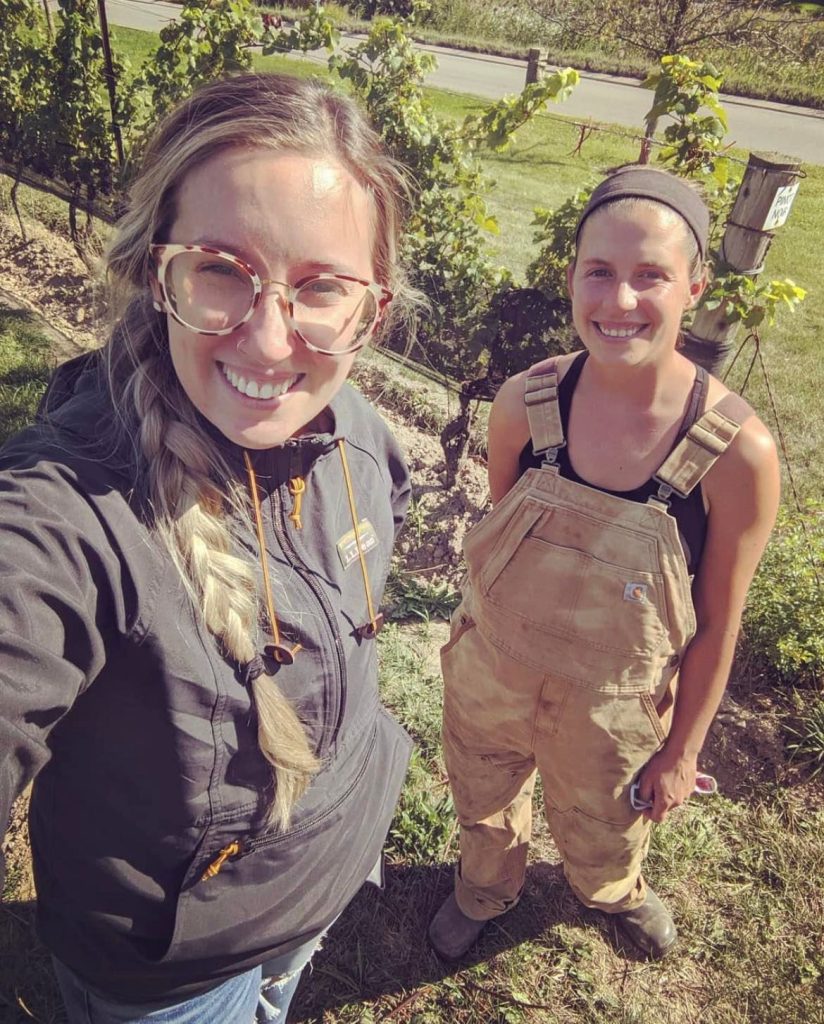
Jess Otting and Augusta Vanmuyen.
As both wineries continue to evolve, Otting and Vanmuyen see a future focused on quality over quantity. “After nearly 25 years, we know who we are and where we excel,” Otting says. “The case counts are smaller, but every bottle we produce represents the best of what we can achieve.”
For Vanmuyen, the vineyards themselves will continue to mature, further enhancing the expression of the Niagara Bench’s terroir. “As the vineyards put down deeper roots, I believe they will express the terroir of the Bench with greater complexity. Our continued focus on organic practices and sustainability will showcase the benefits of these approaches.”
Consistency remains a priority while embracing the natural uniqueness of each vintage. “A healthy vineyard is a resilient vineyard,” Vanmuyen says. “By maintaining strong vines and balanced crops, we equip the vineyard to handle seasonal variations while allowing each vintage to speak for itself.”
When asked about their favourite aspects of their respective roles, both Otting and Vanmuyen emphasize the fulfillment that comes from their deep connection to the land. “Winemaking is an incredibly rewarding craft,” Otting says. “There’s nothing quite like seeing a wine come full circle, from vineyard to bottle.”
For Vanmuyen, chardonnay is a particular favourite. “It’s both resilient in the vineyard and incredibly versatile in the winery,” she says. “Depending on the site, it can produce everything from mineral-driven wines to deeper, richer styles.” Which only makes sense, because, as many consumers are (finally) understanding, Ontario produces fantastic chardonnay wines.
Together, Otting and Vanmuyen are not just crafting wines—they are shaping the future of Tawse and Redstone through dedication, collaboration, and a shared respect for the land. Their work ensures that each bottle tells the story of a place, a season, and the people who nurture it from vine to glass.