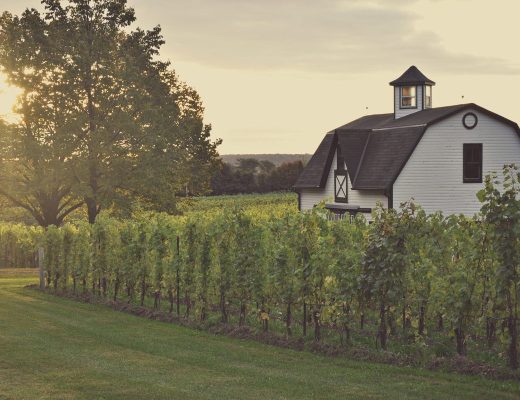



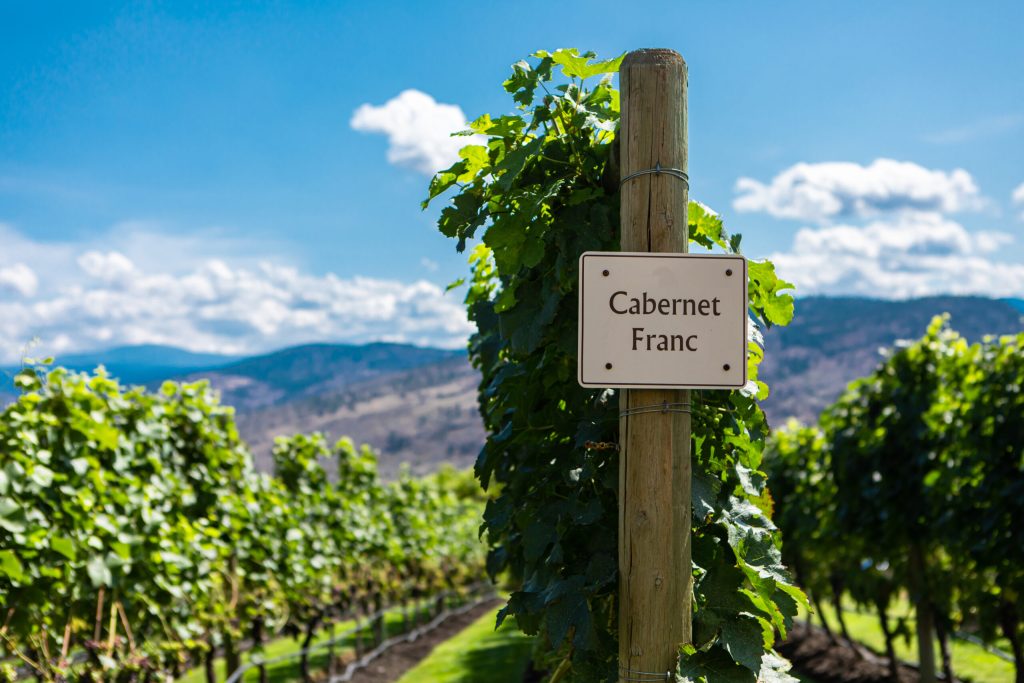
From Niagara and Bordeaux to Tuscany and Chile, cabernet franc adapts to climates, soils, and winemaking styles while revealing a remarkably diverse range of personalities
Cabernet franc certainly gets around! Not only is its presence worldwide, but it’s also one of the parents to several very popular and widely used grape varieties. It gives its DNA to a literal bunch of grapes:
- Cabernet sauvignon (cabernet franc × sauvignon blanc)
- Merlot (cabernet franc × magdeleine noire des charentes)
- Carménère (cabernet franc × gros cabernet)
- Malbec (also called côt) (one of its parents is very likely cabernet franc, though genetics are a bit more complex in this case)
Like almost everything in life, name alone does not convey the real complexities. Cabernet franc expresses its own characteristic notes in wine –typically tart red fruits, herbs like sage, violet, pencil lead, and green bell pepper. Yet it is chameleon-like in that it will readily reflect the climate, soil and topography of the habitat where it grows.
Read Also: The ‘cool’ kid: Cabernet franc’s moment is now
Some of the grapes’ most desirable qualities are those that mean the harvest will be less likely to succumb to a fickle environment. Specifically, it grows quite well in cooler climates, like those found in the Loire Valley or in Ontario, and is quite early ripening. This makes it not only tolerant, but also lucky – it ripens early enough to avoid the frosts or rains that sometimes hit late in the growing season in some parts of the world. Because it is so climate tolerant, when it is cooler the grape retains fresh acidity and even has some floral notes.
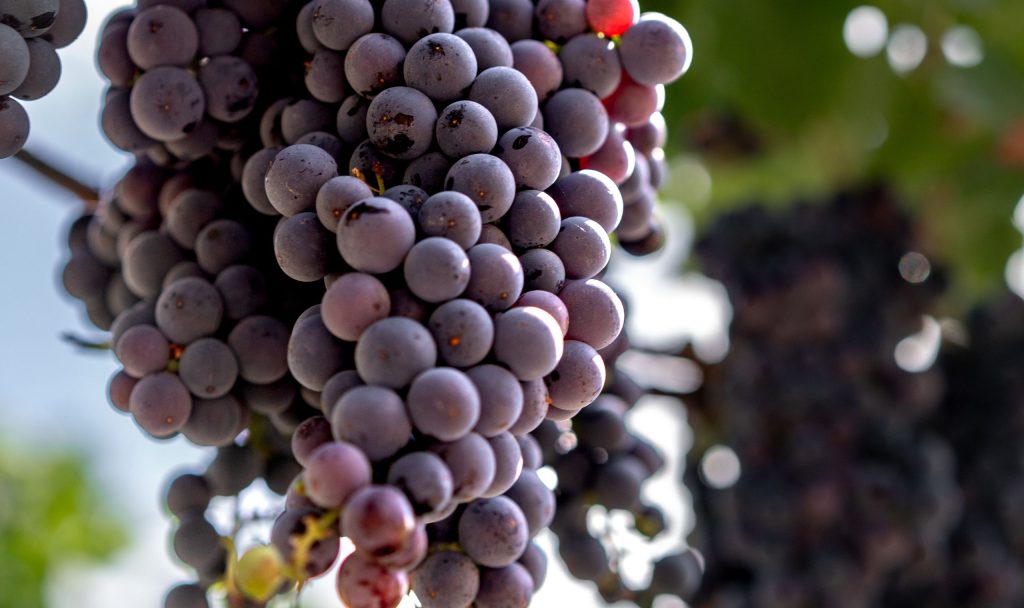
Cabernet franc is chameleon-like in that it will readily reflect the climate, soil and topography of the habitat where it grows.
In warmer climes, it can retain deep black fruit flavours and still hold onto the properties that ensure it brings structure to the wine.
The world has suffered through multiple types of fruit disease pressure over the centuries – some that have wiped out hectares of vineyards in regions of Europe. Cabernet franc is somewhat more tolerant of downy and powdery mildew than many grape varieties making it a great choice in humid environments, for example, in many regions of Bordeaux where it is most often a blending partner with its progeny, cabernet sauvignon and merlot.
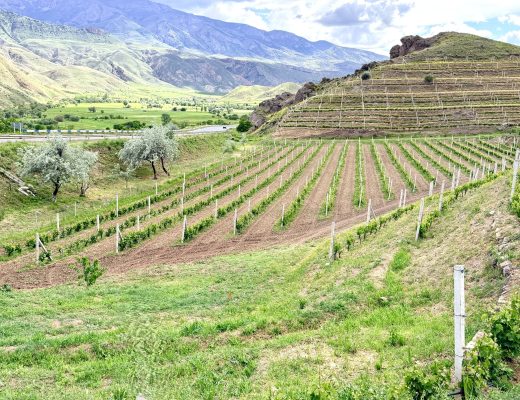
It is also highly adaptable to soil type, so unlike its finnicky colleague pinot noir, cabernet franc will grow in the limestones of the Loire Valley, the clays that predominate on the Right Bank of Bordeaux, and even the gravels and sands of Chile, Argentina, Ontario and the Okanagan Valley of Canada, and Washington State in the US. Such is the versatility of this grape that it can be crafted into a single varietal rosé or fresh red. It can be a blending partner which adds structure and aromatic character to many Bordeaux and Bordeaux-style blends. It is both a solo actor and a team player.
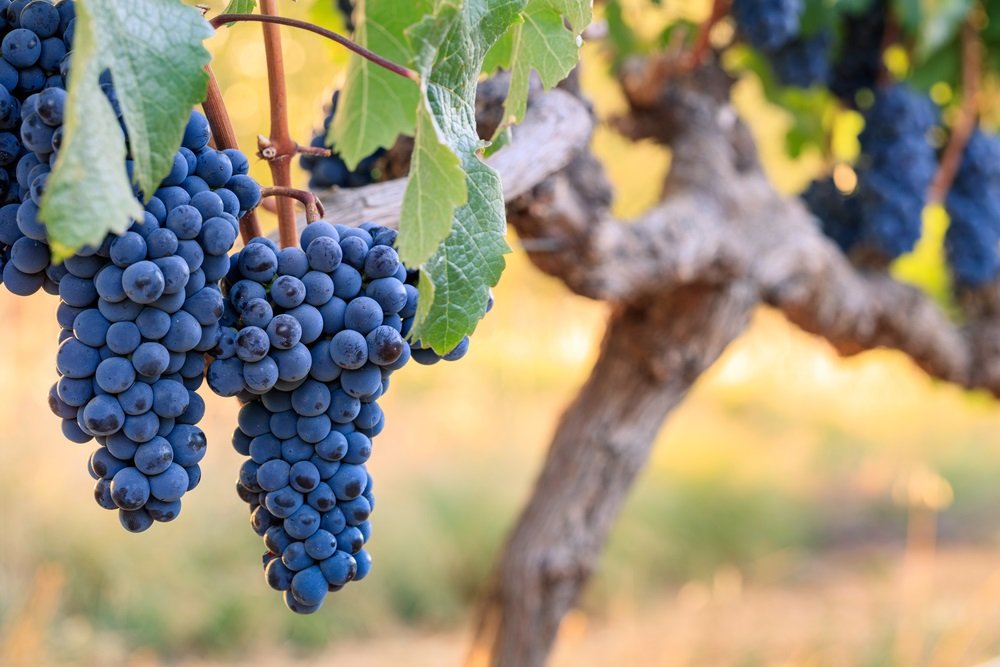
Perhaps most importantly, cabernet franc is both a solo actor and a team player.
The different expressions of cabernet franc can be compared by trying wines from different parts of the world grown on different soils under different climactic conditions and vinified in different vessels by different winemakers. In the end it comes down to preference. Do you like dry or sweet, fruity and floral or multilayered and complex? There are lots of options and a brief trip around the New and Old Worlds, using cabernet franc as your guide, can help you decide.
Canada
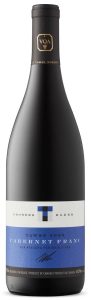 Tawse ‘Grower’s Blend’ Cabernet Franc (Niagara Peninsula)
This is an elegant, cool-climate expression bringing out fruity red currants, raspberry, and as it develops, more graphite notes and subtle herbaceousness. Tawse is organic and consistently produces some of Canada’s most refined, terroir-driven cab francs. The soils there are limestone which brings minerality, clay that allows tannins to develop and water retention, and clay loam that helps drainage and root growth. ($30)
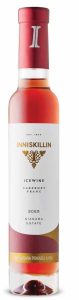 Inniskillin Cabernet Franc Icewine (Niagara Estate)
This is a sweet wine at a low alcohol percentage of 10.5 percent. It pairs very well with blue cheese. The grapes grow on sandy and clay loam with gravel that has a high mineral content. This allows deep root penetration, which is great for Icewine production. Harvest is completed at night when 80 percent of the water in the grape itself is frozen, and the grapes are pressed while frozen. After a slow fermentation the very high sugar content stops further fermenting. ($60/200ml bottle)
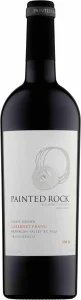 Painted Rock Estate Winery Cabernet Franc (Skaha Bench, Okanagan Valley)
The cabernet franc grows on gravelly, sandy soils that are low in organic material, so drainage is fast and this stresses the vines. Nonetheless, this 100 percent cabernet franc wine is full-bodied and balanced. Swirl it in a glass and you’ll find dark cherry, raspberry, dried herbs, and spice. These flavours sit atop a smooth tannic structure. It is consistently one of the best single-varietal cabernet francs in the Okanagan because it combines dense ripeness with herbal lift. ($55)
Italy
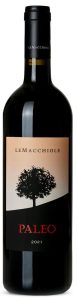 Le Macchiole Paleo Rosso (Bolgheri, Tuscany)
This 100 percent cabernet franc hails from coastal Tuscany. At 14.5 percent alcohol, this is a powerful, structured wine with dark fruit and balsamic notes in the forefront. From both limestone and loamy clay and silt, this variation in soil type promotes freshness, ripeness and aromatics. The grapes are sourced from three estate vineyards and ferment for 25 days in concrete tanks before spending 16 months in new oak barrels, conical trunk casks and stoneware amphorae. ($220)
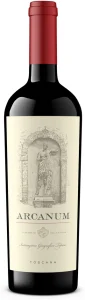 Tenuta di Arceno Arcanum (Tuscany)
This is a different style of cabernet franc than Le Macchiole above, and is grown in the Chianti Classico zone which is rare. Around 14 percent alcohol it is a polished, Bordeaux-like wine, with herbal, coffee, and spice notes. The grapes grow on sandy clay soils which result in a wine that is both aromatic and structured. The aging process for this wine is typically 12 months on 70 percent new French oak and because it is a powerful wine, it is also built to age. ($125)
Chile
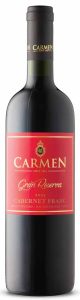 Carmen Gran Reserva Cabernet Franc
Vina Carmen in Chile’s oldest winery founded in 1850 and it is named after the founders’ wife. There are Vina Carmen vineyards across Chile and the one that grows the cabernet franc for this wine is in the Maipo Valley. The soil here is a mix of clay, sand and gravel which supports the freshness and tannic structure found in this wine. This rendition is a medium-bodied, fresh, classic Chilean profile that has a palate bursting with blackcurrant, red cherry, black pepper and supple soft tannins. ($20)
France
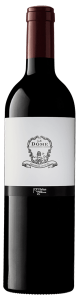 Le Dôme (Saint-Émilion Grand Cru)
One of the highest cabernet franc percentages in all Bordeaux, typically around 80 percent cabernet franc, and the rest of the blend is merlot. In fact, this chateau uses much more cabernet franc in their blend than almost any Bordeaux classified château. The sandy soils are accompanied by iron deposits in light clay. The grapes undergo cold maceration, and the wine is vinified in stainless steel and wooden vats. It undergoes malolactic fermentation which smooths out the rough tannic edges, and it is aged in French oak. This is a powerful, structured, aromatic (violet, spice, dark fruit) wine and is arguably the purest expression of cabernet franc in Bordeaux. ($320-$360)
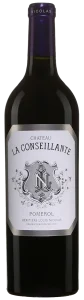 Château La Conseillante (Pomerol)
The chateaux and wines of Pomerol do not have a classification system, but they do have some expressive and age worthy wines. This one is usually around 20 percent cabernet franc and 80 percent merlot and it is grown in gravelly soils. After a four-day cold soak the juice is pressed and is fermented in epoxy lined concrete vats that are temperature controlled. It’s aged for 18 months in about 50-80 percent new French oak and is fined with egg white but is not filtered. It is one of the most cabernet franc–expressive Pomerol wines and is known for its violet undertones, spice, mocha and blackberry notes which reflect the iron rich and gravelly soils of the estate, and the winemaker’s vinification process. ($400-$500)
– Gillian Marks, PhD. is a contributing editor with VineRoutes