


From cider apples and wild fermentation to artisan producers and orchard terroir, here’s why Canada’s best ciders deserve a place alongside fine wine
The humble apple may carry with it some substantially significant cultural cachet, but for imbibers, it’s a fruit. So, you can ferment it. And drink it.
While a range of quality apple distillates exists (Calvados no doubt being the pinnacle), cider is easily the most well-known (and consumed) apple-based alcoholic beverage.
Read Also: Vinho Verde wines explained, plus 8 bottles to try
Historically enjoyed in practically every country where apple orchards exist, cider reached its popularity zenith in places like the United Kingdom, Ireland, Northern France, Northern Spain, parts of Portugal, and a few other countries including the United States and Canada.
However, as the saying goes, the bigger they are, the harder they fall, and the global cider industry was practically wiped out by the transformations brought on by the Industrial Revolution. Cheap, mass-produced beer became more popular. Artisanal farm-based cider production shifted to mass-produced, commercial styles along with the subsequent abandoning of rural orchards and farming practices. The various anti-alcohol movements of the 19th and 20th centuries also helped drive a final nail into the cider world’s coffin. Luckily a resurgence in interest in quality cider spurred something of a global craft cider renaissance in the latter part of the 21st century.
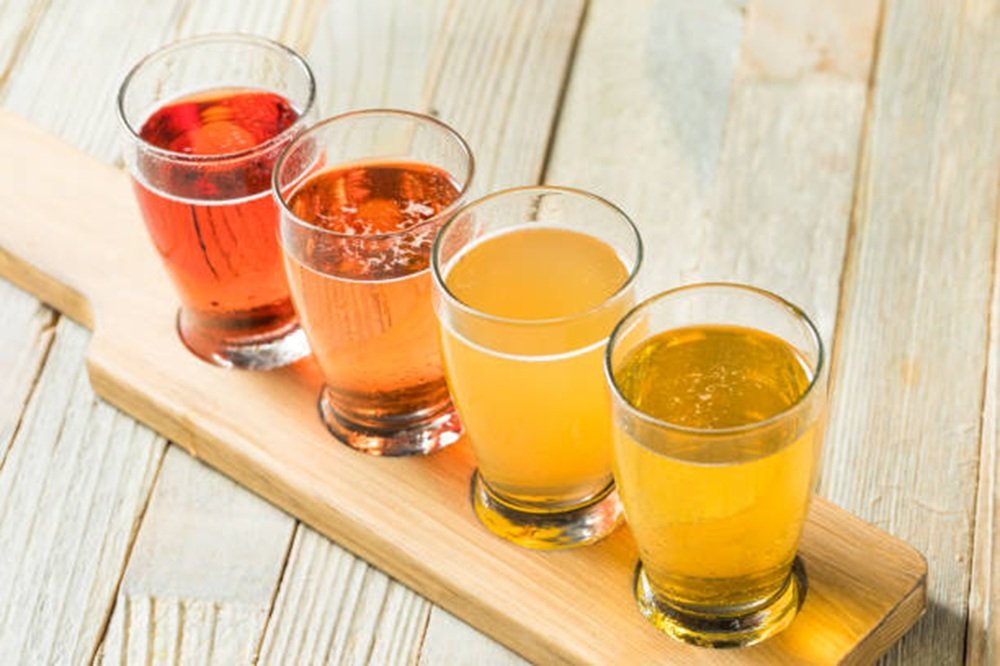
Canada’s cider industry has grown to close to 450 producers across the country.
Considering the abundance of orchards across Canada, you would think there would be a hotbed of cider activity here. As it turns out, there is.
In a classic case of leaving something lucrative for something you love, Richard Liu ditched a career in investment banking in Hong Kong to return to his farming roots, this time here in Canada.
“I grew up in a farming family in Taiwan,” he recalls. “My grandparents spent their entire lives in agriculture; they operated a fish farm and were bamboo shoot wholesalers. Some of my earliest memories are from their farms, and I spent many summers there growing up.”
How he came to be president of Niagara’s Ironwood Cider House was the result of a series of happy accidents.
“I was travelling in Paris and decided to take a short detour to Reims for a few days,” Liu recounts. “While I was there, I visited a small family-run Champagne producer. It wasn’t a famous house. It was just a family making wine, welcoming visitors, and sharing their story.”
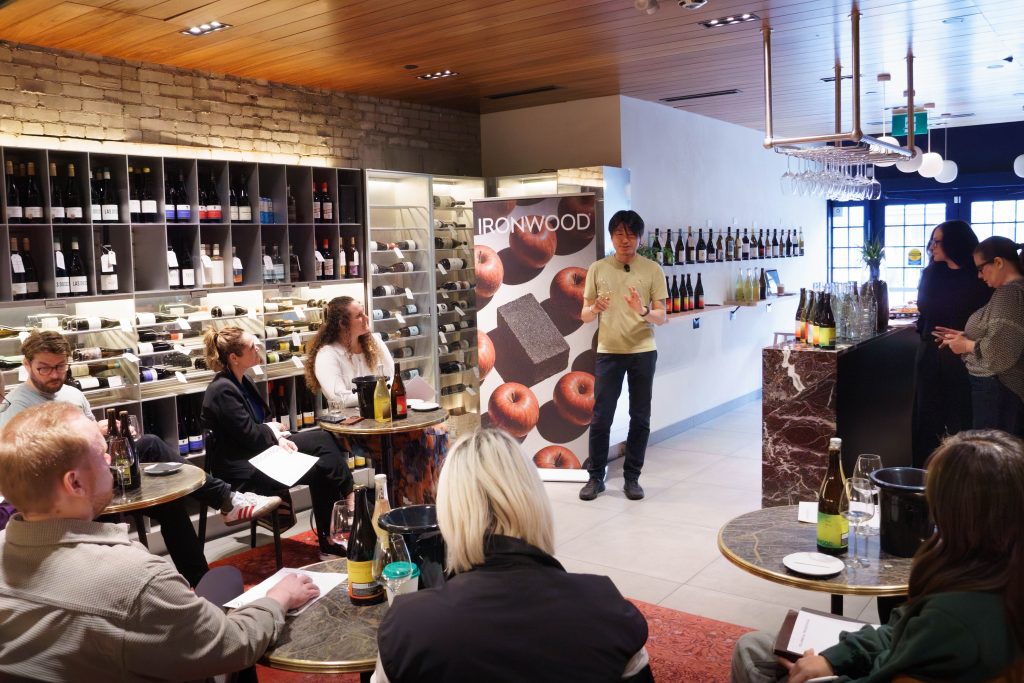
Richard Liu, of Ironwood Cider House, speaks to a media group at a function in Toronto.
Skip ahead eight months from then, and Liu found himself learning the ins and outs of the Canadian beverage alcohol industry. Originally intending to make wine, a 2014 cider tasting offered a glimpse into what the industry was evolving into.
“It was still very early days for craft cider in Ontario. There were probably only around ten cider producers in the province,” Liu confirms. “What struck me was the atmosphere. It was a small community, and everyone was incredibly welcoming. There wasn’t much of the competitiveness you sometimes see in more established industries. People were sharing ideas, talking about apples, fermentation, and helping each other build the category.”
Since that time Canada’s cider industry has grown to close to 450 producers across the country, with about one-third of these based in Quebec. Cider popularity is also on the upswing, though sales are significantly eclipsed by beer, wine, and spirits. It’s worth noting that most domestically consumed ciders are also domestically produced. Yet even the regulators seem a bit unsure of how to categorize cider.
Statistics Canada lumps “ciders, cooler, and other refreshment beverages,” together from an economic standpoint, while Canada Revenue Agency tags cider under the “wine” umbrella and subjects it to similar taxes and customs.
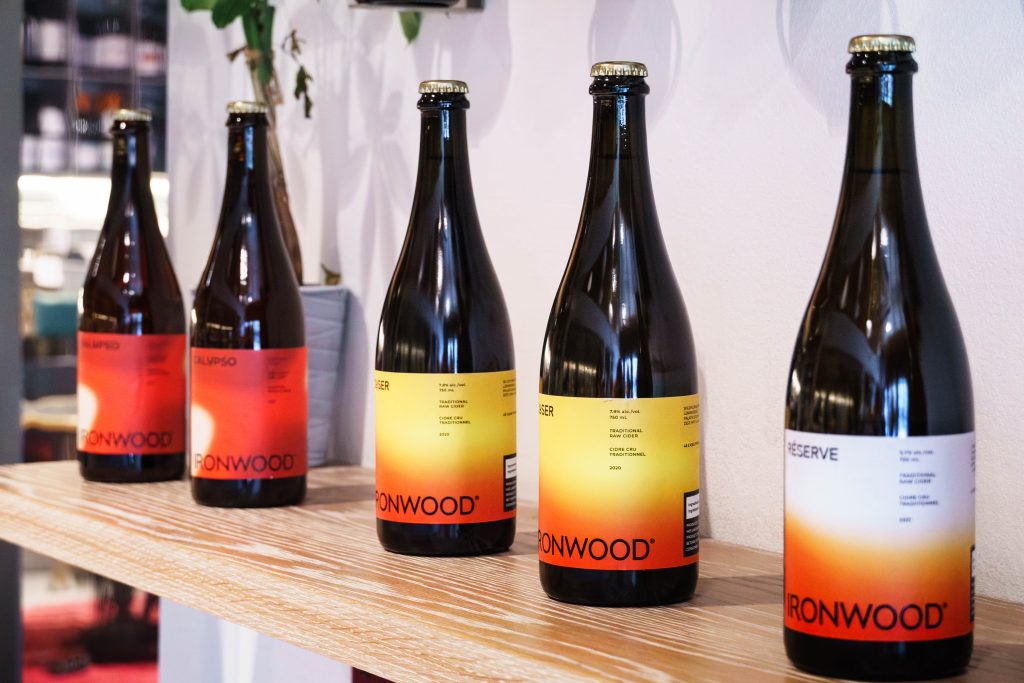
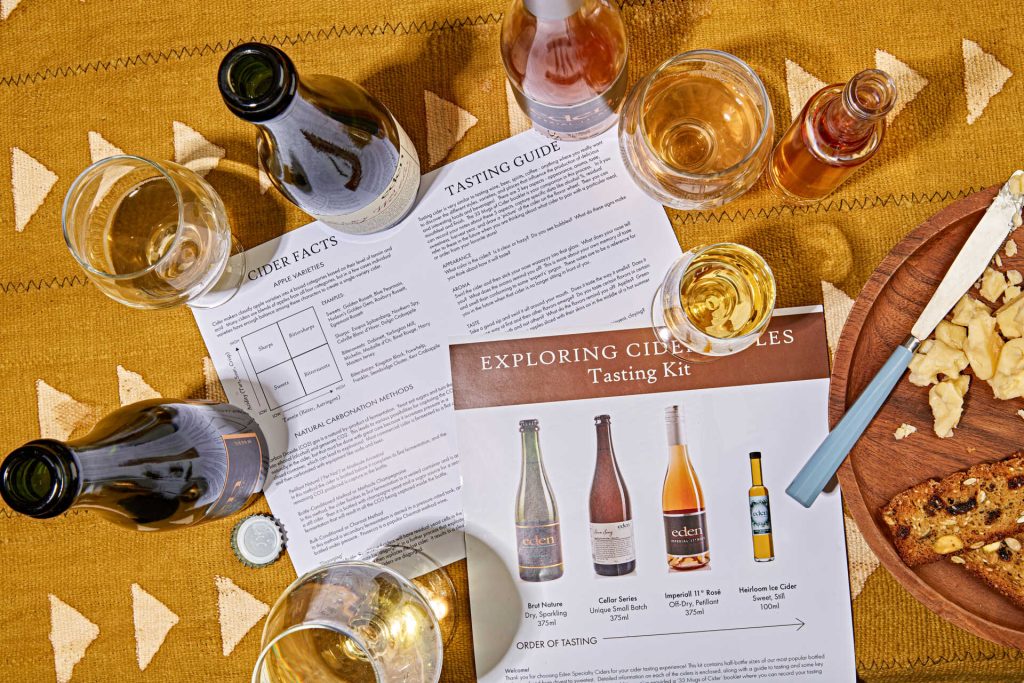
Some of the ciders made by Ironwood.
The “official” definition comes under the federal Canada Food and Drug Regulations and sets out some basic guidelines (fermented apple juice, specific range of alcohol, production rules, etc). Added to this are definitions created by provincial liquor authorities. Also, as the industry grows you can probably expect to see continued refinement in terms of definitions and requirements (or an expansion of these, as is just as often the case).
For consumers (or at least wine drinkers), cider is probably best seen as a “fruit wine.” Swap the grapes for apples, and pretty much the rest of the cider production chain follows that of wine, with a few exceptions.
“Unlike wine grapes, apples are generally harvested at or very near full ripeness,” Liu explains. “Apples naturally contain less sugar than wine grapes—typically around 12 to 14 degree Brix—so there is usually little incentive to pick them early in order to preserve acidity.” As a reference, wine grapes are typically brought in at between 19 and 25 degree Brix.
Interestingly (and in sharp contrast to wine) the variety of apple used doesn’t have the same impact on the final product, though there is generally a distinction between “cider apples” and “eating apples” (also called dessert apples).
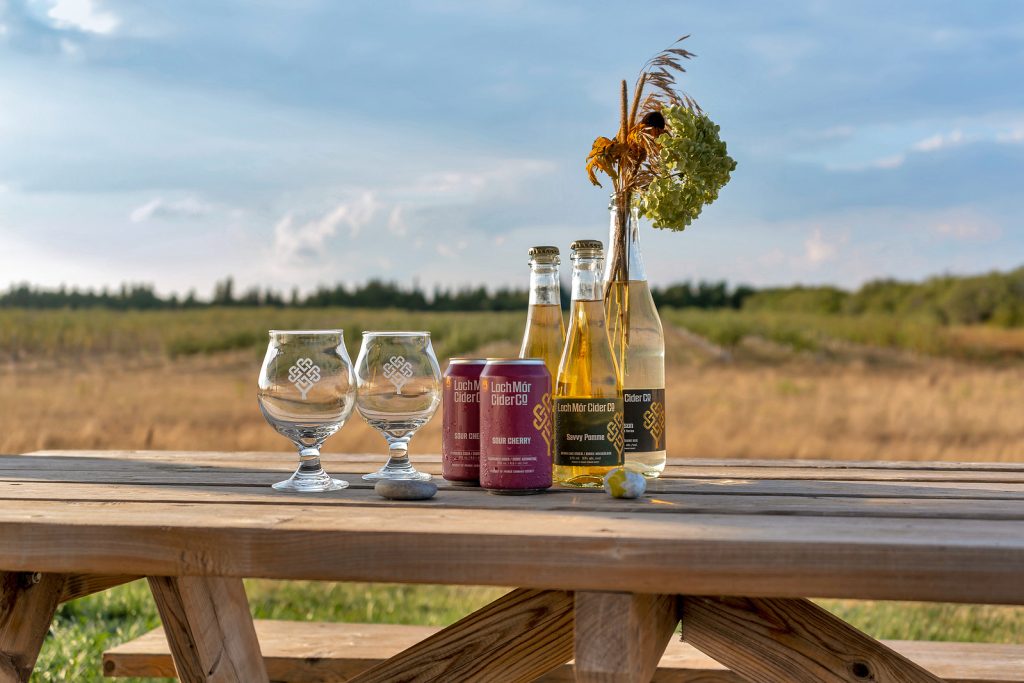
Loch Mor Cider, Prince Edward County, Ontario.
“[Cider] can be made from any apples, but like grapes, the flavour and structure vary considerably between varieties,” informs Sara Boyd who, along with husband Gary, run the Loch Mór Cider Company in Prince Edward County. “Cider-specific varieties have been selected over generations to deliver an ideal balance of tannin, acid, sugar and flavour components. They are not the same as eating apples, as they are often very bitter to taste. Our orchard is planted with 29 varieties of these apples: UK, French and North American cider apples.”
What takes place after harvest in the cidery largely depends on the individual producer’s intended “house style.” That’s probably a decent enough segue to introduce the two broad categories of cider: “artisan” (aka “farmhouse”) ciders, and what we’ll call “commercial” or “industrial” ciders. (Though you would think “craft” and “artisan” would denote the same thing, a quick online inquiry suggests there’s certainly controversy over what constitutes what.)
As the names suggest, the former style is created (at least for the purposes of our definition) using freshly pressed cider apple juice from locally sourced fruit (typically coming from producer-owned orchards), largely fermented using wild yeast strains, and free of added sugar, juice concentrates, water, colour enhancers, and so on. They can be quite cloudy in appearance and generally offer up some earthy (or even “funky”) aromas and flavours, and are on the dry side of the sweetness scale.
The latter style is typically mass-produced, overtly “fruity,” sometimes flavoured with additional components (as are some artisan styles), and almost always sweeter. Broad generalizations, but likely good enough to suggest which type you might prefer. Seasoned oenophiles will probably gravitate to more complex, natural, artisan numbers, but even producers of those will be quick to point out that one variation isn’t necessarily “better” than another).
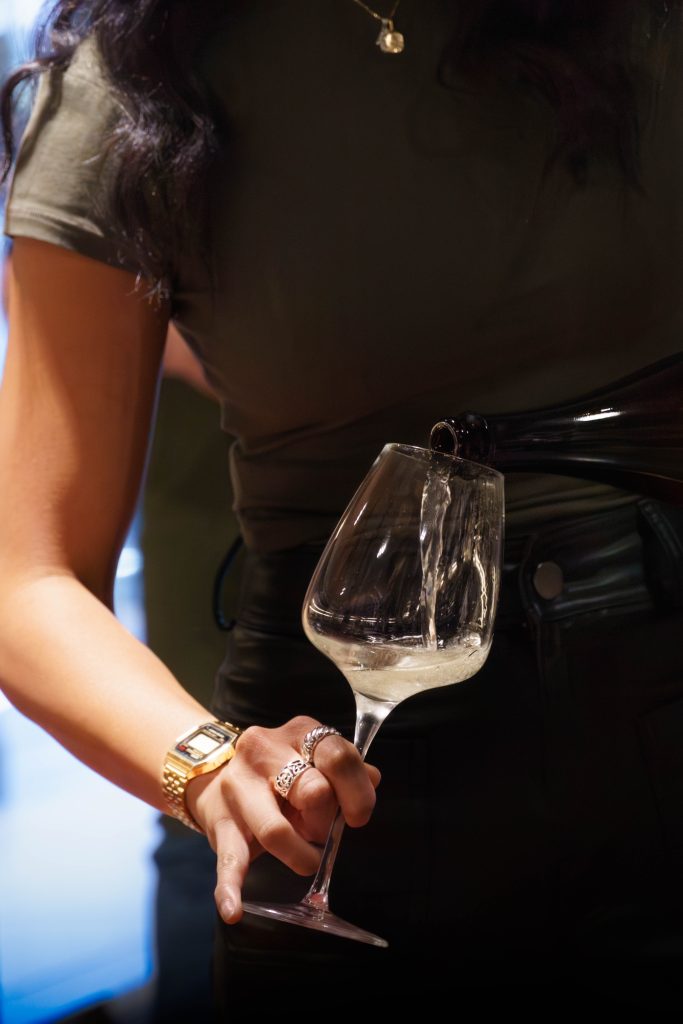
A great way to enjoy cider is to drink it from a classic wine glass.
So how does the ciderophile-in-waiting know what they are getting into?
Price is one dead giveaway. So is, to some extent, its packaging. As always, there are complicating factors and exceptions.
“Typically, artisan ciders are more commonly sold in 750 mL bottles, while commercial products are often found in cans,” says Liu, while cautioning that “there are plenty of artisan ciders in cans and commercial ciders in glass, so packaging alone isn’t a definitive indicator.”
He also points out that currently there is no reliable way to determine the sweetness of a cider based solely on existing labelling requirements. Perceived sweetness is also influenced by factors such as acidity, so two ciders with similar residual sugar levels can taste quite different.
Add to all this (and where things can get truly mind-boggling) is the plethora of cider categories that exist well beyond the broad ones discussed above. In fact, one source I came across while researching identified over a dozen cider types. Dry cider. Sweet cider. Sparkling cider. Ice cider. Rosé cider. Wood-aged cider. Oh, and don’t forget to look up “keeved” cider on your own.
I went back to Liu with a simple–and not totally inaccurate–proposition. “Let’s pretend I’m totally green when it comes to cider. Where do I start?” Using his Ironwood line, he offered up this, starting with his Original:
“This is close to the classic North America craft cider profile. It’s slightly less acidic and sweet, but overall, the fruits we use is similar to those used by other producers. If people want flavoured cider, we have lime, orange, and yuzu to choose from.
“For the next step up, I’d say try Russet for a cleaner expression of artisan cider. Try Sobre for a funkier expression similar to UK artisan cider. Heritage is also funky, but it is more sessional than Sobre. For true single variety expression, try Brambley, as it is well-known variety for its bitter-sharp character from high acid. For full complexity of what cider can be, then Reserve would be the best choice.”
Perhaps the biggest impediment to exploring the variety of cider is actually getting your mitts on some as provincial liquor boards don’t tend to stock a wide selection of the best stuff. Boyd offers some final words of wisdom…and a great solution to the scarcity issue:
“Cider is made like wine. Not all cider is sweet. Cider can be as complex and nuanced as a fine wine, and cider like that exists in Ontario–we are making world class cider here, and people need to just find it. The Ontario Craft Cider Trail is a great place to start to discover the cider in your area. Or come to Prince Edward County and visit our cidery!”
– Tod Stewart is a senior editor with VineRoutes