



Often overlooked in favour of its famous sibling, crémant delivers regional flair, exceptional value, and refined bubbles from across France’s top wine regions
What’s in a name? Champagne is synonymous with sparkling wine, but if you stop there you miss Champagne’s forgotten sibling – crémant.
While only sparkling wines made in Champagne can call themselves that coveted name, crémant can be from anywhere in France. It is made in the traditional method, a process used to make sparkling wines where the wine undergoes a secondary fermentation in the bottle to develop carbonation.
Read Also: A guide to buying quality sparkling wine without Champagne prices
Some of the key questions about crémant centre around what it is, how it’s made, and where it’s from. Answering these questions for several French regions can offer us some choices beyond solely Champagne. Within France, amongst the AOC that produce sparkling wines, some of them are more widely known, and still others are accessible worldwide.
It is worth noting that there are a number of styles of sparkling wine made in France, each with their own characteristics, but our focus here is crémant because it represents the largest category.

Just like Champagne, crémant is made in the traditional method.
Crémant develops bottled pressure between 4.9 and 6 atmospheres. When the cork is removed, that pressure is what causes the distinctive, pop! To develop complexity and flavour richness, premium crémant can spend 12 to 18 months, or even longer, on the lees. Lees in winemaking refers to the sediment of dead yeast cells, grape skins, and other particles left after fermentation.
The lees are often stirred (a process called “bâtonnage”) to add texture and complexity to the wine. The finished product is a sparkling wine offering a variety of flavour profiles that reflect the specific terroir of the grape growing region. Some of the more well-known AOC producing crémant illustrate that point.
The AOC listed below are not an exhaustive list and there are additional AOC within France that produce sparkling wines waiting to be discovered. Next time you are in the market for sparkling wine and want to try something different, try a crémant – there are plenty to choose from.
Crémant d’Alsace
Alsace is in the northeast portion of France, and it is bordered to the east by the Vosges mountains. Its vineyards sit at some of the highest elevations and coolest climates in all of France. Because most of the vineyards are facing southerly, sunlight is able to ripen the grapes to their optimal. The Crémant d’Alsace AOC has proudly produced sparkling wine under the umbrella of its AOC namesake since 1976.
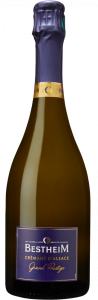 Winemakers in Crémant d’Alsace AOC use pinot blanc grapes alongside riesling, auxerrois, and chardonnay, with the latter two being the first to harvest and many crémant are auxerrois dominant. The rosé variety uses pinot gris. The grapes at the base of the foothills are grown on rich, deep soils.
Buying Crémant d’Alsace can be good value for money if you want to try a pinot blanc sparkling wine. Bestheim’s Crémant D’Alsace Grand Prestige Brut runs around $43 CAD and as the name suggests, it is quite dry. It is fresh and mineral driven with hints of fresh fruits and toast. This pairs well with seafood dishes and creamy pasta.
The Wolfberger Brut Crémant d’Alsace at $22 CAD offers a slightly less dry entry point and has more citrus notes. Again, crisp and refreshing with light bubbles.
Crémant de Loire
Moving southwest across France, the Loire Valley has a special place for crémant, aptly named Crémant de Loire AOC. This AOC sits in the Middle Loire and the vintners in this AOC specialize in sparkling white and rosé wines crafted mostly from chenin blanc, cabernet franc and/or chardonnay. These grapes grow well on the clay and well-drained soils of tuffeau; which is a highly porous limestone. The gravel and sand in the region add to the minerality the grapes obtain.
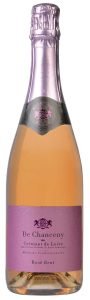 The crémant is made using the traditional method – which is much the same as the Méthode Champenoise. The bubbles the method produces are fine and are named Fines Bulles. De Chanceny, Crémant De Loire Rose Brut is made of 100 percent cabernet franc and is a low alcohol wine at 12.5%. The winery boasts organic, sustainable, and fair-trade practices, and the wine is priced around $22 CAD.
Around the same price but with lower alcohol is Chateau de Montgueret, Crémant de Loire Brut. A little more citrus and minerality, made from chenin blanc. Both wines are great companions to seafood dishes.
Crémant de Bourgogne
Burgundy is long known for its pinot noir and chardonnay in their iconic still wines, but it too has a crémant made in Crémant de Bourgogne AOC. The sparkling white is primarily produced from chardonnay and pinot noir, and rosé can add up to 20 percent gamay. These wines are made in two styles. Eminent which spends 24 months on lees, and Grand Eminent which spends 36 months on lees and three months in the cellar. Even more strict controls are placed on the making of Grand Eminent such that only the first 75 percent of the pressed juice can be used to make the wine.
 Bailly Lapierre, Réserve Brut is made from a blend of pinot noir, chardonnay, gamay and aligote grapes. These grapes are sourced in the Auxerre district which is closest to Chablis. It is no surprise then that the light mineral and toast characters of the wine are indicative of a terroir that embraces a cooler climate and soils that are Kimmeridgian marl, limestone and clay. The cost is about $25 CAD per bottle and the wine is best paired with shellfish or other seafood.
Veuve Ambal, Crémant De Bourgogne, Grande Cuvee Brut at $23 CAD is sustainably grown using only chardonnay and pinot noir. Crisp and refreshing, it also pairs well with crab and lobster.
Crémant de Limoux
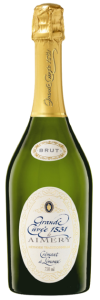 Crémant de Limoux AOC lies in the Languedoc region of France which is the southwest of the country and in the Atlantic corridor. The sparkling red, white, and rosé wines use a blend of chardonnay, chenin blanc, pinot noir and mauzac.
Crémant de Limoux Grande Cuvée 1531 de Sieur d’Arques typically runs around $24 CAD and is a flagship, sustainably produced wine. The Sieur d’Arques winery is a cooperative that was founded in 1946. There are now roughly 190 member growers, and the lineup of sparkling wines spans from extra brut to sweet. Like its crémant siblings from elsewhere in France, this wine’s citrus and green apple flavours pair well with shellfish and other seafoods.
Crémant du Jura
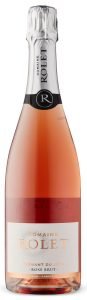 To the north of Mont Blanc across Lake Geneva are the Jura Mountains. Crémant du Jura was established as the AOC that covers sparkling wine made in the traditional method. Both white and rosé sparkling wines are made in this eastern area of France. The rules are well defined – white Crémant du Jura must be a minimum of 70 percent chardonnay, pinot noir and trousseau. The rosé version must have at least 50 percent gris or noir grapes.
Rolet Crémant Du Jura Rosé Brut is a blend of pinot noir, trousseau, and poulsard. The red fruits and somewhat creamy mouthfeel are matched by a crisp freshness that makes the wine a perfect pairing with meaty or oily fish. This crémant prices at approximately $41 CAD.
– Gillian Marks, PhD. is a contributing editor with VineRoutes