



In June, 2025 we featured an interview with Sake Samurai Michael Tremblay. Though the popularity of sake has been on the upswing for some time now, it’s not the easiest drink for neophytes to get a bead on. In order to smooth some of the bumps out of your sake journey, VineRoutes has compiled an introduction to sake that we hope will help with your sake education–and clear up some misconceptions about Japan’s national libation.
Sake primer: just the facts
Sake is not “rice wine.” Technically it’s a beer, with grain (rice) as the base. It’s brewed, not fermented like wine.
The starch in the rice is broken down by “koji.” Koji is created by inoculating a cooked grain with aspergillus oryzae (koji mould). In use, koji converts the rice starch into fermentable sugar. Also employed in the production of miso, soya sauce, mirin and other fermented products.
Read Also: The state of Sake: A masterclass with Sake Samurai Michael Tremblay
Sake is rarely served “hot”. Most high-quality sake is served chilled. Some sake can show well (and even change character) when warmed, but serving sake at “morning coffee” temperature is not advisable.
Sake rice is “polished” to remove the outer husk and expose the starchy core (source of fermentable sugar). The “number” you sometimes see on a bottle of sake denotes how much of the rice grain is left after polishing (so a 70 per cent polish level means more of the grain is left intact than a 45 percent polish). Though a high polish level has historically been associated with higher quality sake, this view has been losing favour; the polish level can change the character (and price), but doesn’t necessarily impact the “quality”.

While sake is Japan’s national drink, sake can be made anywhere, including Canada.
Brewer’s alcohol (“jozo alcohol”) is often added to sake for a number of reasons (search the ‘net for more info). A sake labelled “junmai” indicates that no jozo alcohol has been added. Also, keep your eye open for the term “genshu,” meaning that the sake is bottled undiluted, at natural alcohol level.
Sake “grades” are based on the degree of polishing and the addition (or lack thereof) of jozo alcohol and are set out as follows:
- Junmai Diginjo (50% to 10% or less polish)
- Junmai Ginjo (60% to 10% or less polish)
- Junmai (no polish requirements)
(jozo alcohol is added to the following grades)
- Diginjo (50% to 10% or less polish)
- Ginjo (60% to 10% or less polish)
- Honjozo (50% to 10% or less polish)
- Futsu-Shu (no polish requirements)
It should be noted that there is something of a push to re-evaluate these requirements. “Sake” rice is becoming expensive and evermore difficult to source. “Polish level” = “Quality” is coming under fire. (Sure, it takes more work, but does that make it better?)
Kimoto and yamahai denote sake that is made using the most traditional methods. Both involve the use of natural lactic acid and both typically have more complex, “funkier” flavour profiles than more modern sake. Both take well to being served warm.
Kampai! – a sake selection
 IZUMI Nama Nama Junmai Sake
Located in Toronto’s Distillery Historic District, the Ontario Spring Water Sake Company (IZUMI) has been brewing local Canadian sake since 2011 and is a member of the Brewing Society of Japan. The Nama Nama Junmai is a delicate yet assertive unpasteurized sake offering up floral-tinged aromas of melon, ripe pear, and citrus. Quite lush and viscous on the palate, its flavour profile leans towards vanilla, sweet melon, pear, and banana, with a slight vegetal note suggesting pumpkin before drifting off into a long finish, with just a suggestion of cocoa. (375ml, $18.85)
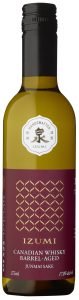 IZUMI Canadian Whisky Barrel-Aged Junmai Sake “Batch No.1”
Sake may be a drink steeped in tradition, but that doesn’t mean brewers aren’t experimental. In this case, an ex-rye barrel from the Spirit of York distillery (also in the Distillery Historic District) was used to age a limited quantity of IZUMI junmai sake for eight months. Aromatically redolent of steamed brown rice, cooked grain, vanilla, caramel, and banana, with subtle woody/whisky undertones. Ripe, round and moderately dry in the mouth, this sake delivers flavours of toasted nuts, coffee, butterscotch, and poached pear that glide into a long, clean finish. (375ml, $26.00)
IZUMI sakes can generally be found in Ontario provincial liquor outlets (and at least one expression is available in Quebec). They can also be purchased through www.izumibrewery.com and have them shipped within Ontario, as well as to Nova Scotia, Manitoba, Saskatchewan, Alberta, and British Columbia.
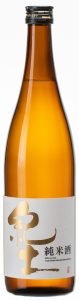 KID Junmai
Heiwa Shuzo in Wakayama Prefecture was founded in 1928 by Tamotsu Yamamoto. It’s KID Junmai is an excellent introduction to top quality sake at a very down-to-earth price. Expect delicate white flower blossom aromas on the nose, along with some of the “usual” sake aromatics (vanilla, pear, banana) combined with some mild earthy notes and an intriguing cedar suggestions. Mildly tropical fruit flavours, with excellent balance, length, and overall structure. When warmed (but not heated), more steamed rice/umami nuances show up. (720ml, $29.00)
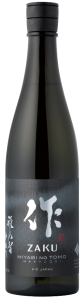 Zaku Junmai Daiginjo Nakadori “Miyabi No Tomo”
Agree or not, the Junmai Daiginjo classification it often seen as “pinnacle” of the sake brewer’s (toji) art. With Yamadanishiki rice polished down to 50 percent of its original size, this intense, elegant, and complex sake from Shimizu Seizaburo Shoten in the Mie Prefecture radiates class, sophistication, and poise. The aromatics are intense and forward and suggest pineapple, vanilla bean, buckwheat honey, apricot, and (maybe of course?) stea med rice and banana. Creamy, viscous, intense, ripe, and full of exotic fruit nuances, it lingers beautifully on the palate before slowly fading into a mildly spicy finish. (750ml, $74.00)
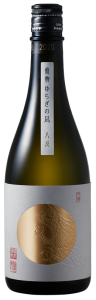 Ryusei from Fuji Shuzo
I have fond memories of visiting Fuji Shoz quite a few years back on a sake tour of Hiroshima’s breweries. This sake is brewed using the kimoto-zukuri method, the oldest technique in sake brewing. You’ll be greeted with delicate almond/marzipan aromas enhanced with subtle suggestions of nougat, green apple, and pear that segue into flavours of pear and melon, all wrapped in an elegant, exquisitely-balanced package that finishes bright and lively. (720ml, $51.00)
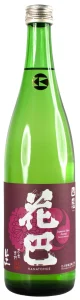 Hanatome “Yodan” Yamahai Muroka Nama Genshu
The humid nature of Nara prefecture presents a challenge if the brewer is looking to make a lighter, delicate style of sake. Thankfully the toji at the Miyoshino Sake Brewery has chosen to work with—rather than against—the environment, and many of his sakes use only natural, ambient yeasts and lactic bacteria, which are abundant in humid environments. The result is truly exceptional. In fact, this is one of the most complex sakes I’ve ever tasted. Intensely umami-laden on the nose, with hints of soy sauce, mushroom, fresh butter, toasted sesame, cooked rice, and sour cream. In the mouth it’s creamy and dense, with some funky/earthy notes that combine with suggestions of dried fruit and nuts, toasted grain and milk chocolate that trail off to a long, mildly toasty finish. This is a genshu sake, bottled at a natural 18.5 per cent ABV. (720ml, $48.00)
The last four sakes can be purchased directly from Nippon Sake Imports (depending on where you are). Contact sales@nipponsake.ca for more details.
[VineRoutes would like to thank the Sake Institute of Ontario (SIO) for its assistance in procuring the reviewed sake samples.]
– Tod Stewart is senior editor with VineRoutes and has acted as a judge for the Toronto International Sake Challenge