


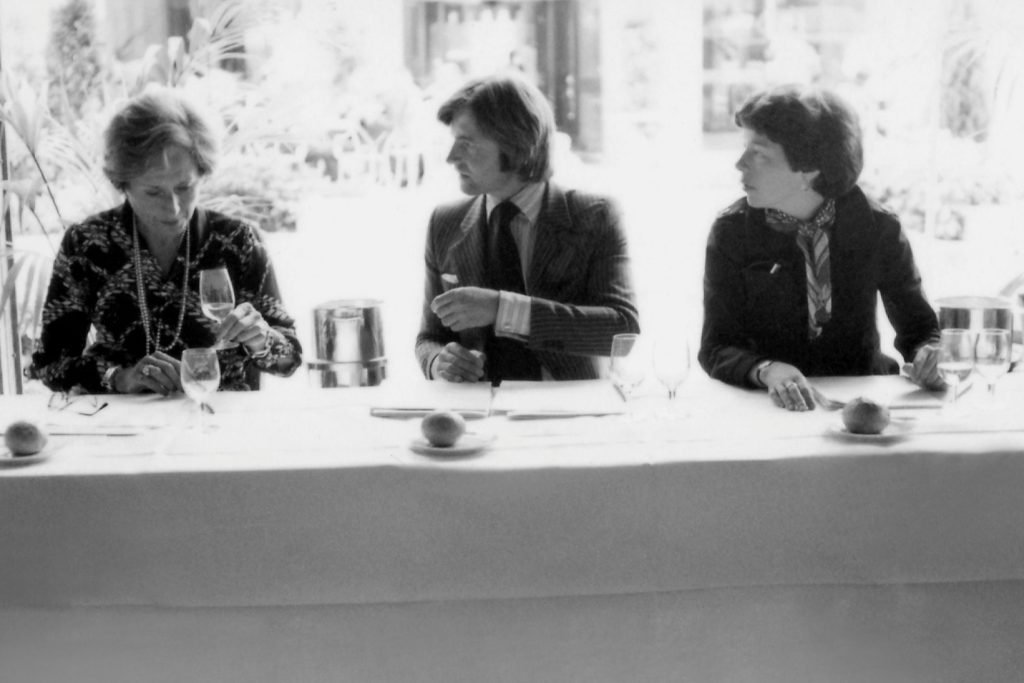
Half a century later, its legacy endures; not just as a historic upset, but as the moment that gave the wine world permission to believe
On May 24, 1976, a quiet tasting in Paris did something the wine world wasn’t prepared for. It challenged hierarchy, disrupted tradition, and, perhaps most importantly, gave emerging wine regions permission to believe they belonged.
Fifty years later, the Judgement of Paris remains one of the most mythologized—and misunderstood—moments in wine history.
Read Also: A fresh account on the ‘Judgement of Paris’
At its core, the tasting, organized by British wine merchant Steven Spurrier, was never intended to be a revolution. It was, quite simply, a promotional exercise: a blind tasting staged in Paris to generate interest in a wine shop and school. French judges, French setting, French expectation of dominance. California wines were, at best, meant to be curious outsiders.
Instead, they won.
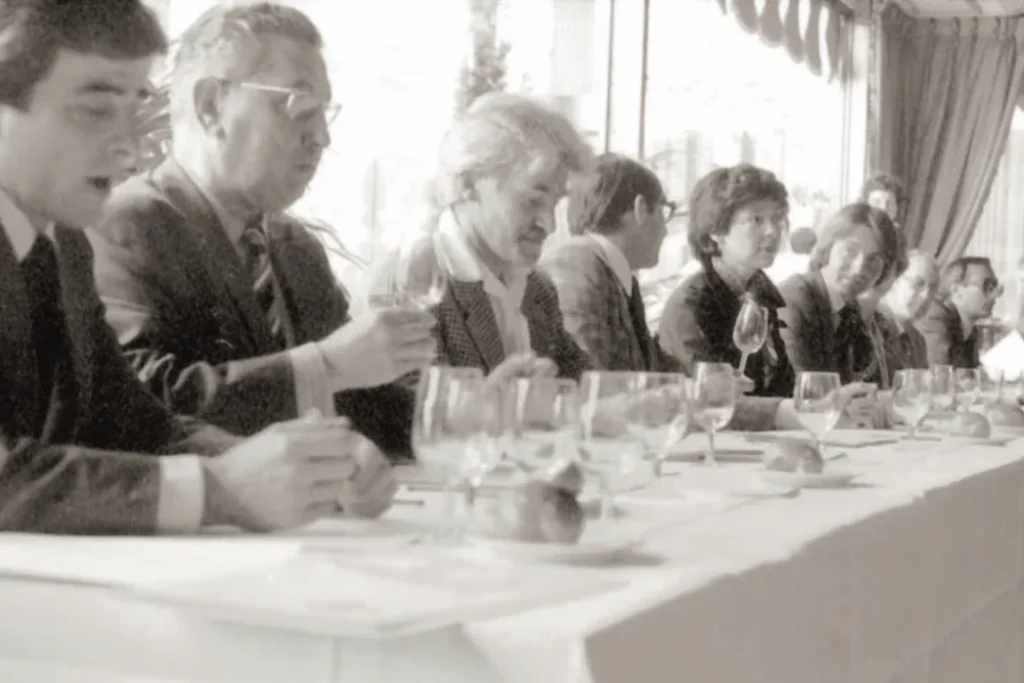
The panel of judges at the InterContinental Hotel on May 24, 1976, included journalists, restaurateurs and vintners. (Courtesy of Bella Spurrier/Academie du Vin)
Both the chardonnay and cabernet sauvignon categories were topped by California producers, stunning the panel and, once word spread, the global wine establishment. France—the benchmark, the blueprint, the unquestioned authority—had been beaten at its own game.
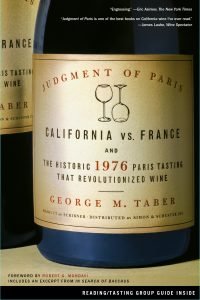
The Judgement of Paris: California vs. France, written by George M. Taber.
The only journalist in the room, George M. Taber, captured the moment firsthand – initially for TIME Magazine, where a small column was published towards the back of the issue. Eventually, he’d write the story that the moment deserved, authoring the book Judgment of Paris: California vs. France. It’s a book that, for many—including myself—served as an early gateway into understanding wine beyond the glass.
There’s something enduring about Taber’s account. It doesn’t just document the result; it humanizes the players—scrappy, unconventional, and, at the time, largely unknown figures who weren’t trying to upend the world but did so anyway.
Reading it for the first time, it felt less like history and more like ignition.
That story, however, doesn’t end in Paris. It begins there.
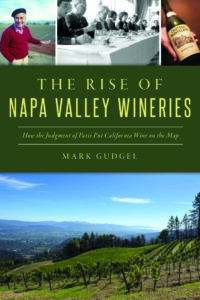
The Rise of Napa Valley Wineries, written by Mark Gudgel.
In The Rise of Napa Valley Wineries – How The Judgement Of Paris Put California Wine On The Map, author Mark Gudgel expands the narrative, providing context, consequence, and, crucially, continuity. In my own review for VineRoutes, I explored how Gudgel’s work acts as a natural bookend to Taber’s original account, deepening our understanding of how a single tasting evolved into a decades-long transformation of the global wine landscape. (Read my full review here.)
Together, the two books form a compelling before-and-after: Taber captures the spark; Gudgel traces the fire.
Both are widely available on Amazon, and if there’s ever been a moment to revisit them, this anniversary is it.
Of course, not every retelling has done the story justice.
Even Hollywood got in the game—or more accurately, got in the way. The 2008 film Bottle Shock, starring Alan Rickman as Spurrier, attempted to dramatize the event but ultimately delivered a version so loosely connected to reality that it borders on parody. For those familiar with the actual history, it’s a frustrating watch. Spurrier himself was reportedly not a fan, and it’s easy to see why.
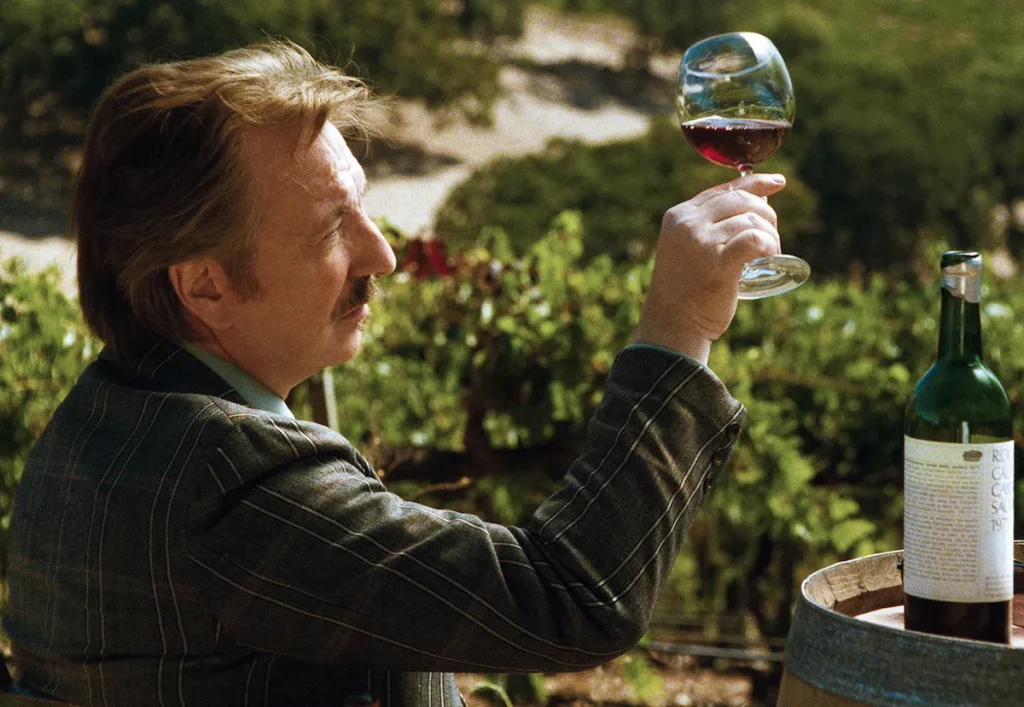
Alan Rickman starred as Steven Spurrier in Bottle Shock, a story based on the events of The Judgement of Paris.
That said, Gudgel offered a more charitable perspective, suggesting to me that the film’s value lies not in its accuracy but in its accessibility. “The cinematic equivalent of white zinfandel,” as he framed it. An entry point, perhaps, for audiences who might not otherwise engage with wine at all.
I conceded that point. Reluctantly.
But the real story, and it’s one worth telling and re-telling, is far more compelling without embellishment. Because what the Judgement of Paris ultimately did was dismantle the idea that greatness in wine was geographically predetermined. And that ripple effect extended far beyond California.
Regions like New Zealand, Chile, and Argentina—each now firmly established on the global stage—owe part of their trajectory to the psychological shift that followed 1976. If California could do it, why not Marlborough? Why not Mendoza? Why not the Maipo Valley?
And closer to home, why not Canada?
It’s easy to forget that in 1976, Canadian wine was in no way part of the international conversation. Canada was largely viewed as a producer of lamentable or dreadful low-quality fortified or “pop” wines (such as Baby Duck) made from native labrusca grapes. Today, regions led by Ontario’s Niagara Peninsula and British Columbia’s Okanagan Valley are producing wines of remarkable precision and identity, including cool-climate chardonnay, world-class pinot noir, and, of course, Icewine, which has carved out its own global niche.
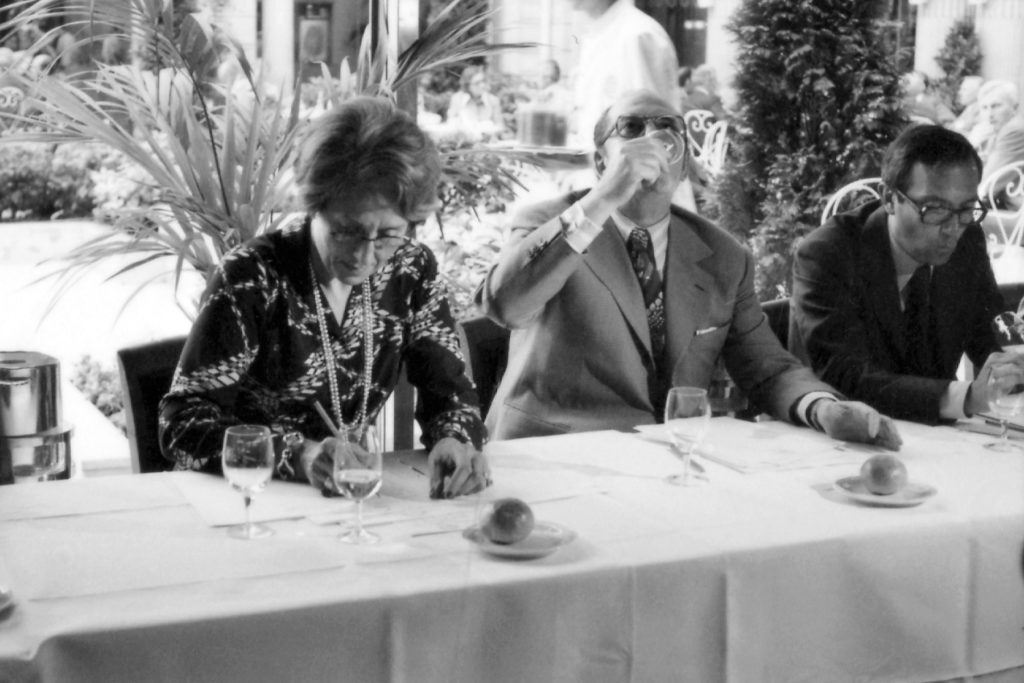
Fifty years on, the influence of the Judgement of Paris is still unfolding. (Bella Spurrier/Academie du Vin)
Would this evolution have happened without the Judgement of Paris? Perhaps.
But would it have happened with the same confidence, the same ambition, the same willingness to challenge the status quo? That’s less certain. Because the true legacy of that tasting isn’t just that California won, it’s that the rest of the world realized it could compete.
In that sense, the Judgement of Paris may well be the most important “marketing event” in wine history. Not because it was designed that way, but because of what it inadvertently unleashed: a democratization of quality, a rebalancing of prestige, and a global expansion of what we consider worthy of attention.
Fifty years on, its influence is still unfolding.
Every time a Canadian wine earns international acclaim, every time a small producer from an emerging region finds its way onto a world-class wine list, every time a consumer chooses curiosity over convention—that’s the Judgement of Paris, still at work.
Not as a moment, but as a mindset.
– Carmelo Giardina is the principal editor of VineRoutes