



A new VQA Ontario category brings together sparkling wine and Icewine in a style designed to offer something distinctly Canadian
Ontario’s sparkling wine category has a new addition, and this one comes with a distinctly Canadian point of difference.
Fracette, a new VQA Ontario sparkling wine category, officially launches with six wines from three of the province’s leading wine producers. Its defining characteristic is the use of Icewine as the sole sugar source for the secondary fermentation—the stage in traditional sparkling winemaking that creates the wine’s bubbles.
The result is a dry, Brut-style sparkling wine that aims to combine the freshness and vibrancy associated with sparkling wine with the depth and concentration associated with Canadian Icewine.
Read Also: More than chardonnay: Véronique Rivest’s vision for Canadian wine
The name Fracette is derived from “frozen” and “facet”: frozen, reflecting grapes on the vine, and facet, referring to the complexity of a multi-faceted gem. The wines are made from Vitis vinifera grapes with vidal Icewine used in the tirage liqueur. The category permits a maximum of 15 g/L residual sugar, alcohol levels between 7 percent and 14.9 percent, and a minimum pressure of three bar, with no artificial carbonation.
The idea is less about creating another variation on an established sparkling style and more about establishing something that could be identified specifically with Canada.
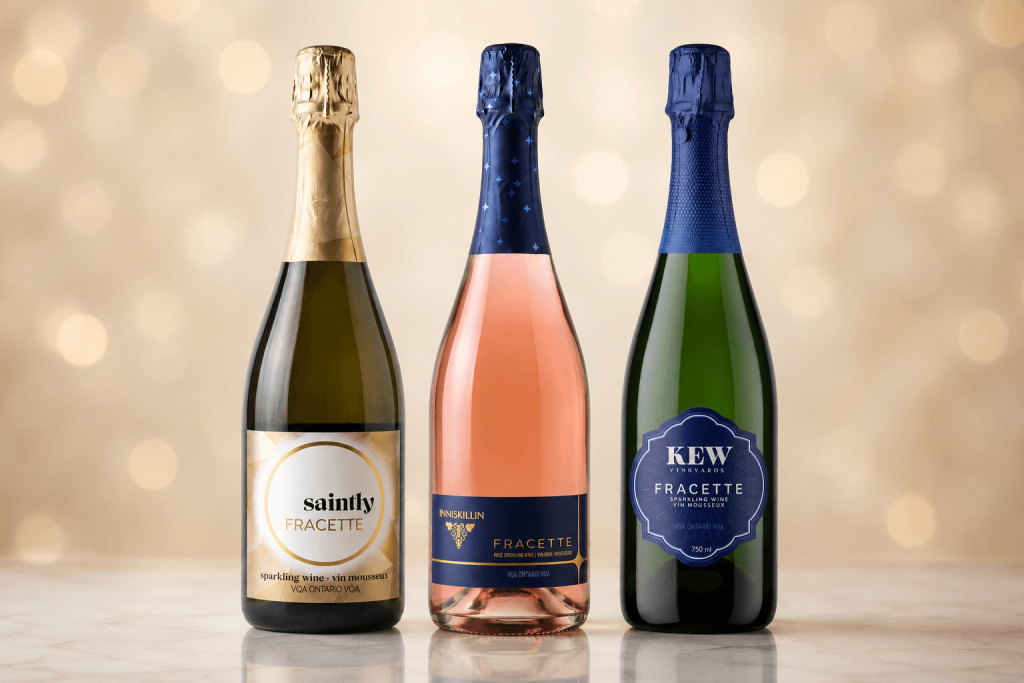
Introducing Fracette from Saintly, Inniskillin and Kew Vineyards. (Courtesy of Arterra Wines Canada).
It should be noted that the Icewine component is not intended to make Fracette sweet. During secondary fermentation, the yeast consumes the Icewine-derived sugar, leaving behind the characteristics that distinguish the style: layers of citrus and orchard fruit, a subtle richness, complexity and a fine mineral thread. That difference is particularly evident in the wines themselves.
Thirty Bench’s Fracette Brut, for example, shows how the Icewine component can move the wine beyond familiar sparkling fruit and acidity. The Icewine character is noticeably present, contributing additional depth and texture and giving the wine a distinctive flavour profile beyond conventional sparkling-wine flavours.
The Inniskillin Fracette Rosé takes a different expression of the concept. Here, the Icewine component contributes concentration and weight on the palate, giving the rosé a fuller, more layered mouthfeel while retaining the freshness expected from a dry sparkling wine.
Creating a new category
Fracette arrives at a time when sparkling wine is undergoing considerable change, with consumers increasingly exploring styles beyond the traditional benchmarks of Champagne and Prosecco.
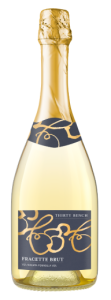
Thirty Bench
According to the launch materials, Prosecco now accounts for more than a third of sparkling occasions, while younger consumers in particular are showing interest in discovering new styles and experiences. The producers behind Fracette see that appetite for exploration as an opportunity to introduce something that does not simply replicate an existing international style.
“Fracette is for consumers looking for new styles to experience, who enjoy premium, fruit-forward wines, and who seek out great Canadian wines,” says Isabelle Méplon, a representative of Arterra Wines Canada.
“What sets Fracette apart is its Icewine inclusion — it adds a uniquely complex, elevated sparkling experience to the category.”
Importantly, the intention is not necessarily to position Fracette as a direct substitute for Champagne or Prosecco.
“Our objective is to grow the category, not just compete for share within it,” Méplon says. “We expect Fracette will attract new drinkers to sparkling wine altogether — through an elevated experience, a uniquely complex flavour profile, and its distinctively Canadian grounding.”
That distinction is central to the launch strategy. Fracette is being presented as a category rather than a single brand, with the initial wines allowing different producers to interpret the style through their own identities.
The launch includes Inniskillin Fracette Rosé, Peller Estates Private Reserve Fracette Brut Rosé, Henry of Pelham Fracette Sparkling Rosé, Thirty Bench Fracette Brut, Saintly Fracette and Kew Vineyards Fracette.
A price point designed for discovery
While Fracette is positioned as a premium innovation, the initial wines remain below $35, creating several entry points into the category (At the low end, Thirty Bench sells theirs for $20 and Inniskillin’s is priced at $34.95 – with the four bottlings priced in between that range).
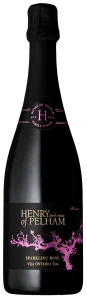
Henry of Pelham
Méplon says the range is intended to make the category accessible to consumers who are curious about trying something new without positioning the wines exclusively as special-occasion purchases.
The strategy also reflects a broader change in how sparkling wine is being consumed. Fifty-seven percent of sparkling occasions take place outside traditional celebrations, reinforcing the idea that the category increasingly extends beyond weddings, anniversaries and other milestone events.
For the producers, however, the first challenge is less about establishing a particular sales number than establishing an understanding of what Fracette actually is.
“We’re not sharing specific sales targets for year one — what matters most right now is building awareness and understanding of Fracette as a completely new category,” says Méplon.
“Success for us looks like consumers understanding what makes Fracette special — the Icewine inclusion, the Canadian story — and choosing it as a go-to, not a novelty. Education is what sets the stage for that.”
A Canadian identity for sparkling wine
The idea of using Icewine in sparkling wine is not simply a marketing exercise. The technique gives the category its defining winemaking characteristic and provides a connection between two of Ontario’s most recognizable wine strengths.
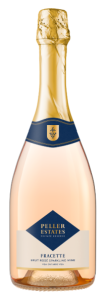
Peller Estates
“Initiating the secondary fermentation with Icewine is a delicate and unique winemaking choice,” says Katie Dickieson, vice president of operations at Andrew Peller Limited. “It creates a refreshing sparkling wine, with complexity of flavour, tension and vibrancy.”
For Paul Speck, president of Henry of Pelham, that Canadian connection is precisely what gives the category its potential.
“This is where sparkling goes next. A dry, modern style with our Canadian signature Icewine adding complexity. Like Prosecco or Champagne, Fracette is made to sit beside the world’s best and hold its own,” he says.
The launch brings together six wines entering the Ontario market at once. Rather than a single producer attempting to establish a new style, the coalition approach gives Fracette several expressions from the outset. It also leaves room for the category to develop.
For now, the wines are available through the LCBO, participating estate wineries, The Wine Shops and Wine Rack, as well as other participating retailers across Ontario.
Whether Fracette becomes a lasting category will ultimately depend on more than the novelty of combining sparkling wine with Icewine. Consumers will have to understand the style, recognize its difference and determine where it fits within an increasingly diverse sparkling market.
But the proposition is clear: take a winemaking technique associated with Canada’s most distinctive wine, apply it to one of the world’s most established wine categories, and create a sparkling style that could belong uniquely to Ontario.
For a province with a long history of finding new ways to work with its cool-climate grapes, Fracette is another attempt to put a distinctly Canadian facet on sparkling wine.