


Vinequity’s Grapes & Growth program is breaking barriers in the wine industry, offering immersive education in viticulture and winemaking for BIPOC professionals. Through mentorships, hands-on experiences, and industry connections, this initiative is paving the way for a more inclusive future in Canadian wine
An editorial by Beverly Crandon
With 30 percent of the population identifying as a visible minority in Ontario, according to Wikipedia, and with 50 percent of Canada’s population estimated to be a visible minority by 2041, the call for diversity in the Canadian wine industry has never been more important. Not only for marketing and inclusivity efforts, but for opportunities to exist with the industry itself.
This is where Canadian not-for-profit organizations such as Vinica in British Columbia, and Vinequity (national organization) enter the picture. Their goal is to ensure that people who identify as Black, Indigenous or People of Colour (including BIPOC people who identify as LGBTQ+ or are living with a disability) that work in all aspects of the wine industry are given equitable treatment and opportunities to access, grow and thrive as visible leaders in the Canadian wine industry.
Read Also: Jackson Family Wines partners with The Urban Grape on wine studies award
Through mentorships and scholarships, both Vinica and Vinequity champion the cause of BIPOC wine professionals to promote more cognitive diversity around the decision-making tables in wine.
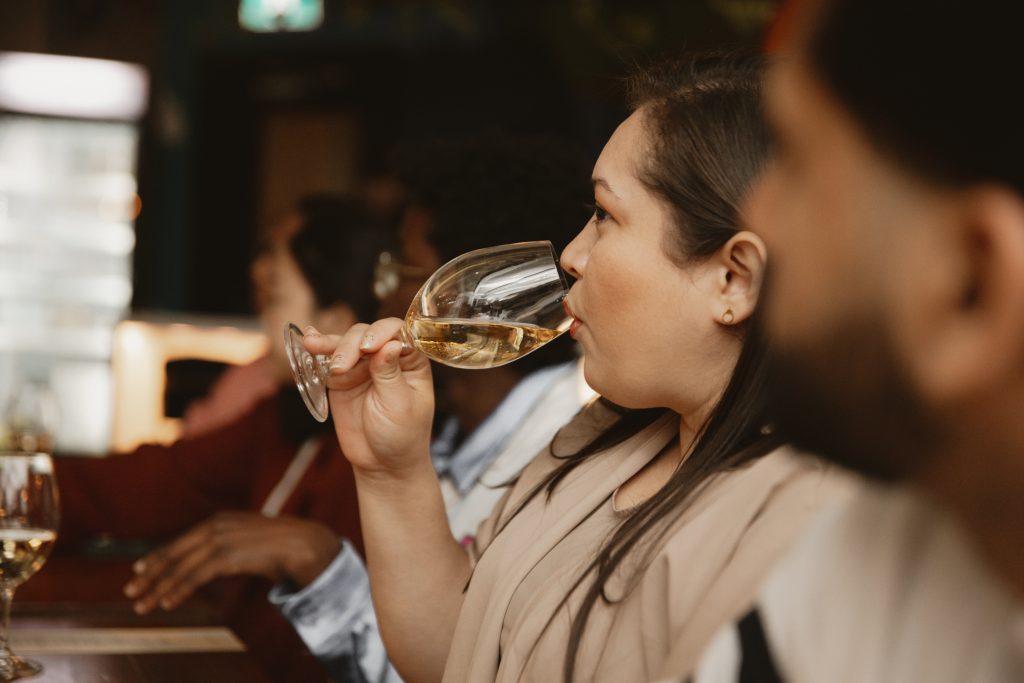
When Vinequity began offering mentorships and scholarships in 2020, most applicants were interested in wine sales, writing, and marketing. Those early applicants then embarked on taking introductory wine courses and, like many wine professionals, they caught the bug and went down the rabbit hole. Their interests in wine expanded. For some, the expansion of curiosity was all about making them a better wine sales rep or wine writer, and for others, that curiosity led them to take a whole new direction in the world of wine that found them on the wine production track.
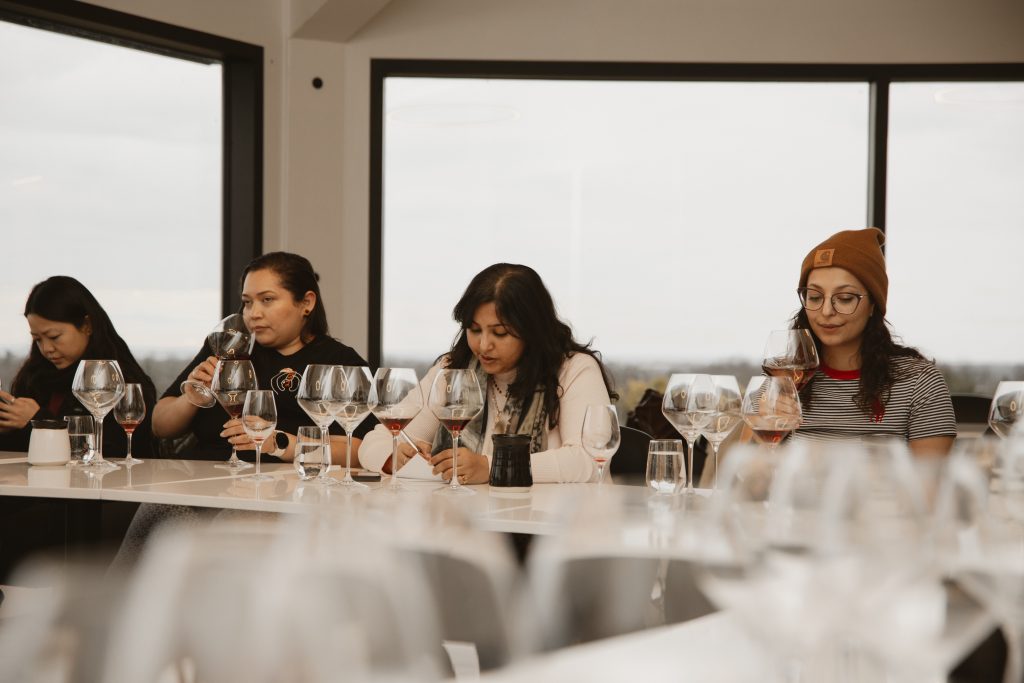
(Photo by: Mona Mousa of Mingle Creative Co.)
To help immerse applicants into the world of wine, Vinequity launched its Grapes & Growth program this past November – a multi-day, immersive wine bootcamp focusing on viticulture and winemaking. The bootcamp took 11 successful applicants on an immersive viticulture and winemaking educational experience. The week-long journey started in Prince Edward County and ended in the Niagara Peninsula.
The Grapes & Growth program was filled with informative lectures from Dr. Helen Fisher and Dr Wendy McFadden-Smith, as well as winemaking sessions at Closson Chase, Malivoire, and Flat Rock Cellars. The group also underwent viticultural sessions at Lighthall Vineyards, Cave Springs, and Jackson Triggs.
“The Grapes & Growth program is a first step in covering diversity in all aspects of the wine industry.” – Vinequity Co-founder Nabilah Rawji
The structured learning sessions were coupled with giving the bootcamp participants a chance to connect with winemakers and ask questions in a more casual setting. In Prince Edward County, Rosehall Winery hosted the group to a Salon where participants got a chance to visit the stations of invited winemakers from Broken Stone Winery, Stanners Vineyard, Trail Estate Winery, and Rosehall’s own associate winemaker, Lee Baker. The Niagara Salon allowed the group to taste wines from 80X Wines, Palatine Hills Estate Winery, Domaine Queylus, and Paradise Grapevine.
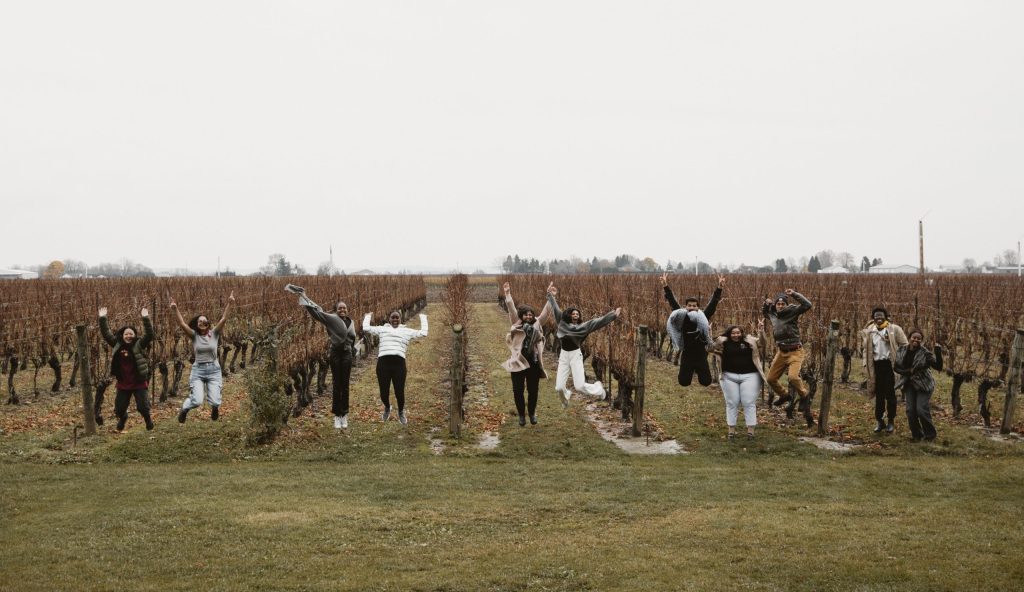
(Photo by: Mona Mousa of Mingle Creative Co.)
If the above were not enough, Vinequity invited winemakers from the regions to join them at dinner, again giving the camp participants exposure to those in the business doing what they desired. Dinners included representatives from wineries such as Traynor Vineyard, Nyarai Cellars, and Marrynissen.
“This experience has been humbling, inspirational and educational. I have learned so much about people’s experiences and their journeys. This has been a very rare opportunity. I wish I had 20 days,” said participant Phoebe So when asked about her experience at the Camp.
“The Grapes & Growth program is a first step in covering diversity in all aspects of the wine industry,” says Vinequity Co-founder Nabilah Rawji. “Additionally, with the increased demand for grape growing and production mentorships, initiating a program like Grapes & Growth just made sense.”
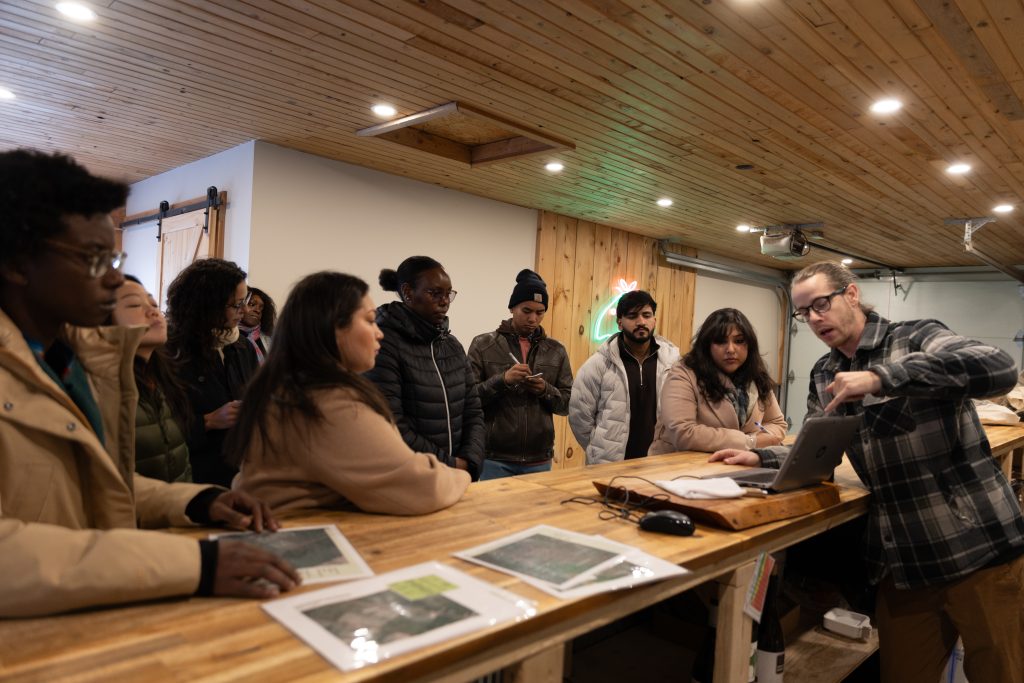
(Photo by: Mona Mousa of Mingle Creative Co.)
As participants reflected on their experiences throughout the week, it became clear that initiatives like Grapes & Growth are essential for fostering inclusivity within the wine sector. The impact of this Camp will extend beyond the individual participants – it has the potential to enrich the entire industry by bringing diverse perspectives and innovative ideas to the forefront, which is just what is needed to answer the call of a more diverse Canadian consumer market.
“Grapes & Growth creates a supportive and nurturing environment for Black, Indigenous and People of Colour wine professionals to learn about viticulture and wine making from experts across the industry in Ontario, and in turn, encourage potential career placements with wineries,” says Nupur Gogia, Vinequity Chair of the Grapes & Growth program.
Plans for Grapes & Growth 2025 is in the works and a visit to British Columbia’s wine regions is on the radar.
 Beverly Crandon is a CMS-certified sommelier, founder of the Spice Food & Wine Group, and co-founder of Vinequity, a non-profit amplifying BIPOC voices in Canada’s wine industry.