


From historic classifications to climate adaptation and new ownership, producers across the region are redefining what Bordeaux wine looks like in the 21st century
The largest and most well-known classification schemes for Bordeaux wines are the 1855, Crus Bourgeois, Saint Emilion, Graves, and Artisan – all of which are quite different. Nevertheless, all require adherence to the strict rules of the classification. Some require classifying the wines, while others, the estate.
The acknowledgment of environmental sustainability, organic and biodynamic practices and even the estates’ ability to accommodate visitors can affect a chateau’s ability to gain and maintain its classification. Whether or not a chateau is classified is a continued and hot debate.
Read Also: The basics of buying Bordeaux
Some argue that the classification lends status, and buyers feel like it helps them identify wine quality. Others feel that this is an outdated way of doing business and a good wine doesn’t need a classification. Regardless, the classifications persist and the trends in Bordeaux wine buying suggest a purchasing split.
It is reported from auction data that the 1855 First Growth classified wines are showing a resurgence in demand – which is a seeming reversal of fortune. The Second Growth are, however, exhibiting a slightly lower uptake. Yet, the consumer demand for rare wines is still high. There is a definite difference between wine buying for consumption versus investment.
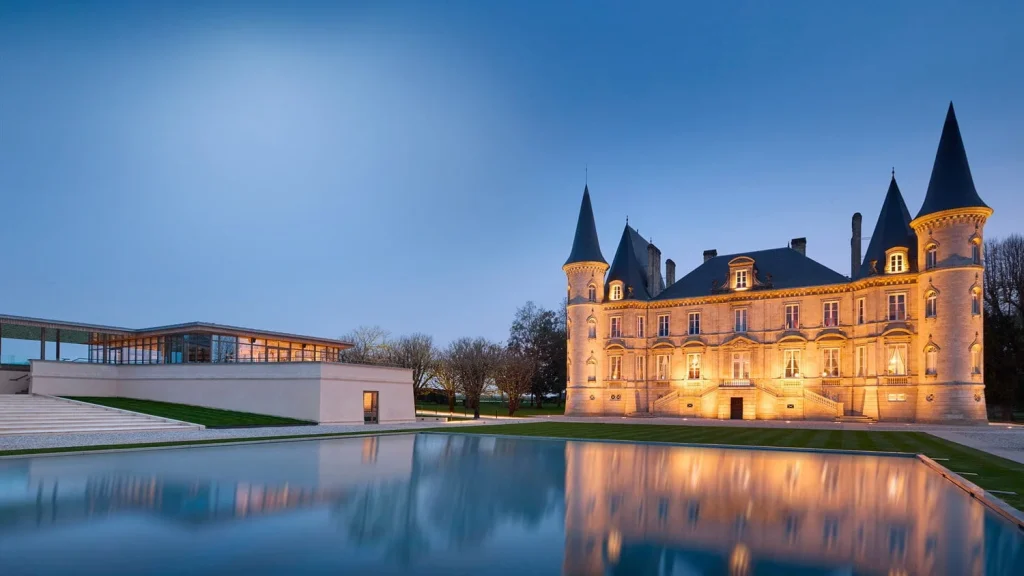
Pichon-Baron
The chateaux were recently reporting that the 2025 vintage was a stellar year. The yields are slightly lower, but the quality is very high. Some estates are saying this is even better than the 2022 vintage. By early October of 2025, the harvest was complete. The dates have been creeping up over the years to meet the change in climate. No vintner wants to face overripe grapes with a higher than desired sugar content, leading to high alcohol levels during fermentation.
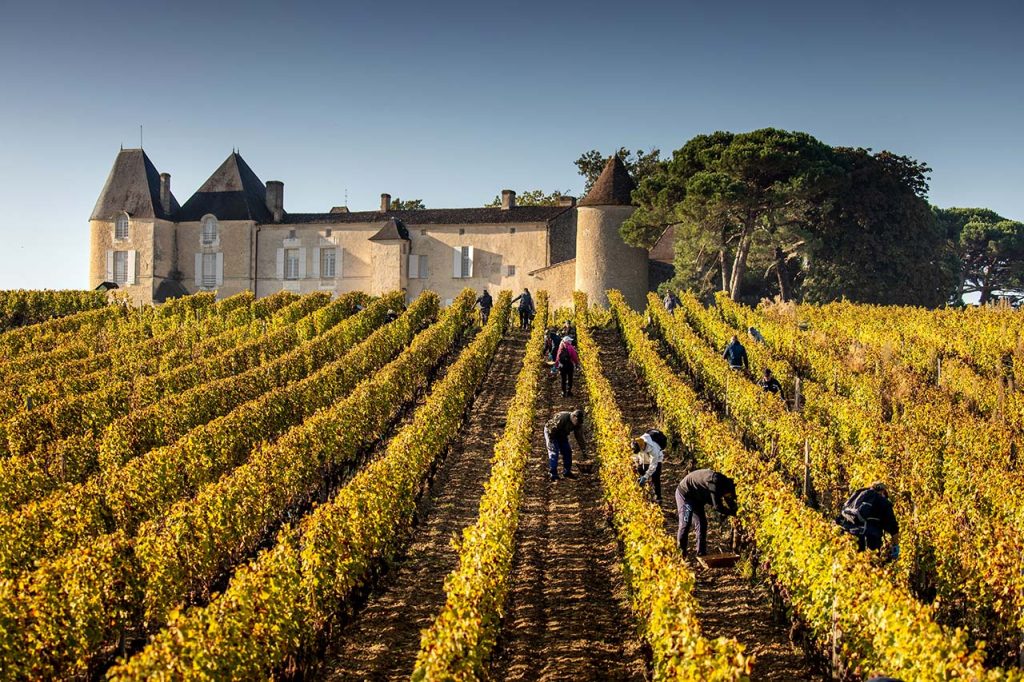
Although the results of the past year have shown that there is still a big demand for Bordeaux wines, in recent years, sales have fallen. Some chateaux have closed their doors and others have sought ways to push on hoping this is a temporary phenomenon. In view of that, Bordeaux is not immune to the pressure of corporate takeover. This is evident at some of the larger chateaux. For instance, Chateau Pichon-Baron is under the ownership of the insurance group, AXA, and Chateau d’Yquem (pictured above) is owned by LVMH. Chateau Haut-Bailly has remained family owned, but it is now in the hands of the family of an American banker. All of that to say it takes money to have the ability to upgrade operations and invest in making the best available technology work to make great wines.
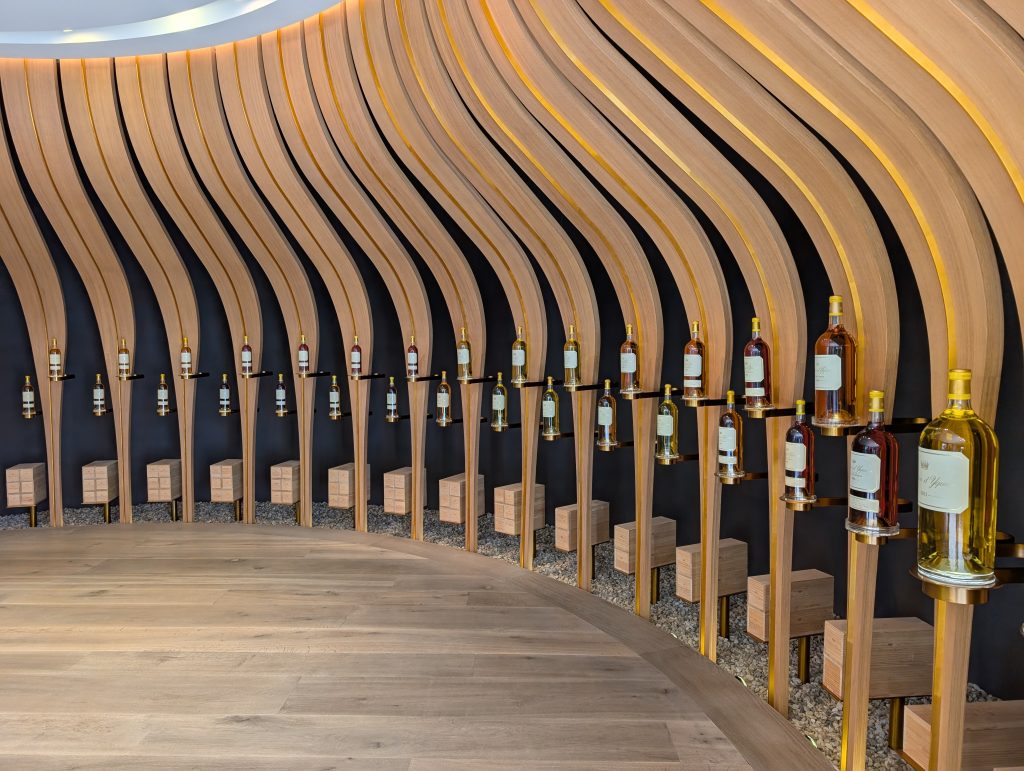
Inside Chateau d’Yquem (courtesy of Gillian Marks).
Nowadays, many Bordelais still employ hand pickers and sorters which is a high labour cost. Those chateaux with plenty of resources use optical sorters that can pull out the less than perfect grapes leaving only the best for the first label. Of course, not every chateau has the resources that permit the most up to date vinification systems. It often takes a large injection of capital, or at least a significant amount of fund-raising effort.
At Chateau de Malle the new owners are engaged in the process of significant renovations. The chateau and grounds date back to the time of Cardinal Richelieu in the late 1500s, but the family that owned the chateau in recent years abandoned it – no longer able to afford to maintain the property or the vineyards. The family that bought the chateau are lovingly restoring each room of the chateau and tackling small plots within the vineyards. It is classified as a historic monument, so getting permission to do anything takes time and patience. They currently produce limited amounts of sweet wine emblematic of their Sauternes vineyards.
Others, like Chateau Doisy-Daëne in Barsac (since 1924), honour family legacy that includes the world renowned Denis Dubourdieu, whose son, Jean-Jaques, now runs the entire enterprise. Denis, working at the University of Bordeaux, was critical to the understanding of the impact of chemical pesticides on the flavours in sauvignon blanc grapes. His work helped propel the improvement of grape quality not just in Bordeaux, but worldwide.
Denis passed away in 2016, but Jean-Jaques adheres to the tenets of his father’s work. He considers his work at the chateau as a continuation of his family business, and he travels internationally to introduce and educate on the wines of his Bordeaux region.
At Chateau George 7 in Fronsac, Sally Evans, an Englishwoman, owns, farms, harvests, ages, and bottles in small quantities with little help. She’s a one-woman enterprise who harnesses her intelligence and good sense along with local help and a great deal of energy. She took on the project in 2015 but didn’t have her first full vintage until 2018. George 7 and Sally are unusual in the Bordeaux landscape. Very small at only 3 hectares of land under vines – but a niche that is growing.
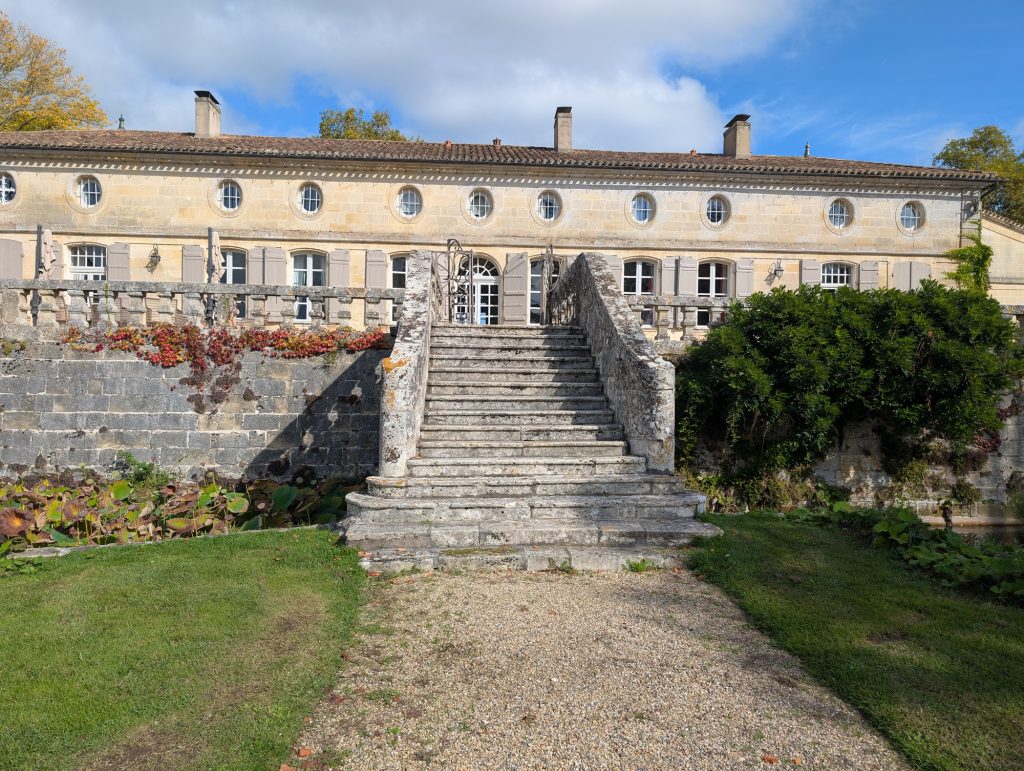
Chateau Beauregard’s 12th Century wall. (Courtesy of Gillian Marks).
These days, the winemakers of Bordeaux have recognized that the soils and terroir of Bordeaux also support grapes that can make high quality dry white wines in addition to the traditional dry red and sweet white wines they famously produce. Amongst the many rules of the appellation system that predominates in France are the dictates of the types of grapes that can be grown. The primary red grapes in Bordeaux are cabernet sauvignon, merlot, cabernet franc, petit verdot, malbec and carménère. The primary white grapes are sauvignon blanc, semillon, and muscadelle.
More recently, there’s a movement within the Médoc and Barsac to get a white wine appellation ratified that would recognize the typicity of the grape varietals in those specific regions and would help bring recognition to the newest white grapes and wine styles Bordeaux can produce.
What is on the horizon for an old-world winemaking region facing new world challenges? Undoubtedly the change of climate requires new imagination. A research project undertaken at Pichon-Baron includes the use of shade nets on the merlot vines to help limit sugar production and thereby reduce the threat of excess alcohol. This experimentation means the merlot grapes under scrutiny cannot be used in their classified wine.
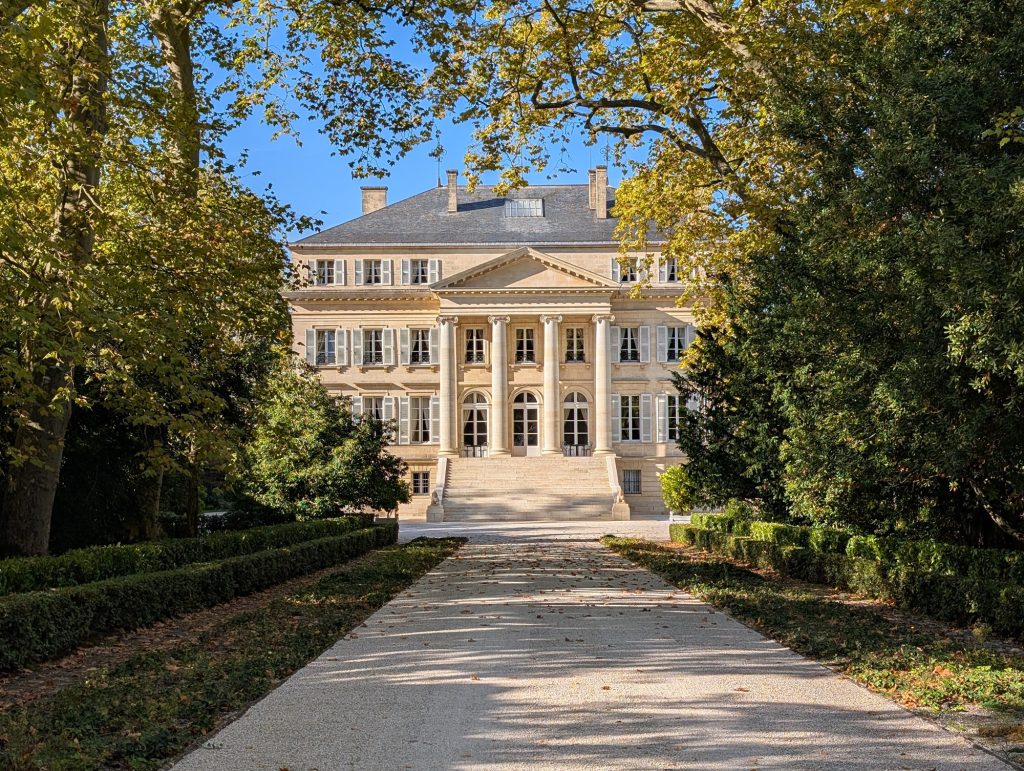
The grand entrance at Chateau Margaux (courtesy of Gillian Marks).
Fermentation vessels are no longer only oak barrels. The use of large concrete vats and amphorae are introduced to experiment with vinification techniques and flavour profiles. Some chateaux are experimenting with glass Bonbonnes to age their wine, more generally seen in Southwest France.
Consolidation in real estate ownership has certainly altered what is possible to try when capital is available. The newest generation of winemakers are also more inclined to experiment with new techniques and different ways of developing wine styles – different from the wines that were included originally in the 1855 Classification.
A range of tastes is available for red and white wine drinkers. Here are a few suggestions:
Château Doisy-Vedrines Sauternes 2016 – A sweet, Sauternes wine made of semillon grapes. It is perfect with a blue or soft ripe cheese, as an aperitif, or an after-dinner sip. ($40)
Haut-Bailly II 2021 – Dry, red blend of merlot, cabernet sauvignon, and lesser amounts of cabernet franc and petit verdot. This vintage’s blend is mainly merlot at 70% with cabernet sauvignon at 25%. It can be enjoyed with beef or venison dishes and a boeuf bourguignon is a great pairing. ($75)
Chateau Tour de Haut-Moulin 2015 – Dry, red blend of cabernet sauvignon at about 60%, merlot at around 35% and petit verdot. This is a wine with plenty of dark fruits, cassis and nicely balanced tannins. Ready to drink now with red meat, game, duck, or creamy dishes and paella. ($28)
Château Olivier Blanc 2021 – This fresh dry, white wine from Pessac-Leognan is a blend of 75% sauvignon blanc and 35% semillon and is at the start of its drinking window. It has a nose and palate of citrus and orchard fruits complemented by a honeysuckle nose. Plenty of minerality and crispness make this a great accompaniment to chicken, fish, pasta, shellfish, and soft, ripe cheeses. ($69)
– Gillian Marks, PhD. is a contributing editor with VineRoutes and has her Bordeaux Masters Certification.