



Exploring sake’s evolution, culture, and craft through the insights of one of the world’s foremost sake authorities
Is it food or is it art? Do I eat it or admire it?
The dinner – crafted by Yuji Sugiyama, the young but incredibly talented personal chef to Matsunaga Takeshi (Consul-General of Japan in Toronto) – attained almost kaiseki-like precision and visual impressiveness.
Each component of the seven-course gustatory journey (the “appetizer” serving itself consisting of nine immaculately sculpted amuse-bouches) was accompanied by a sake specifically chosen to marry with the exotic dishes. Guiding the room through the labyrinth of flavours and textures was Toronto-based sake specialist Michael Tremblay.
Read Also: Sommelier Q&A: James Peden is elevating the wine experience in Toronto
To say Tremblay is a “specialist” when it comes to his knowledge of Japan’s national drink is to perhaps not put a fine enough point on things. Reproducing even a severely compressed version of his bio here would pretty much exhaust my word count. Founder and Instructor, Sake Scholar Course. Panel Chair, International Wine Challenge (Japan and London). North American Support Desk, Japan Sake and Shochu Makers Association. Sake Judge, U.S, National Sake Appraisal (Hawaii). Instructor, Wine Spirit Education Trust (WSET), Level 1, 2 and 3 Award in Sake. Instructor, Wine Spirit Education Trust (WSET), Level 2 Award in Wine. Certified Advanced sake Professional (ASP), Sake Education Council…you get the drift. But perhaps the most intriguing designation in Tremblay’s impressive list of accolades is that of Sake Samurai.
VineRoutes recently caught up with Tremblay (no easy feat) to ask him about this title, as well as about the current state of the sake industry.
Sake Samurai. That sounds pretty impressive. What does this title connote? What did you have to do to attain this title?
I am so honoured to be called a samurai! The title is bestowed on individuals all over the world that are recognized for their work in promoting sake and Japanese culture. There are currently about 100 in the world. You can’t apply for it or decide to be one. It’s awarded to approximately five people annually, who are invited to Matsunoo Taisha, a 1300-year-old shrine to sake that is located in the city of Kyoto.
When, and why, did you develop an interest in sake?
I have always been curious about different cultures from around the world. I developed an interest in wine because it was an interesting lens to explore many corners of the world. When I was hired at Ki Modern Japanese + Bar – about 19 years ago – I started my sake adventures. Like everyone, the learning curve was very steep at first, and I quickly fell in love with it, the brewers and their history. I fell in love telling each brewer’s story.
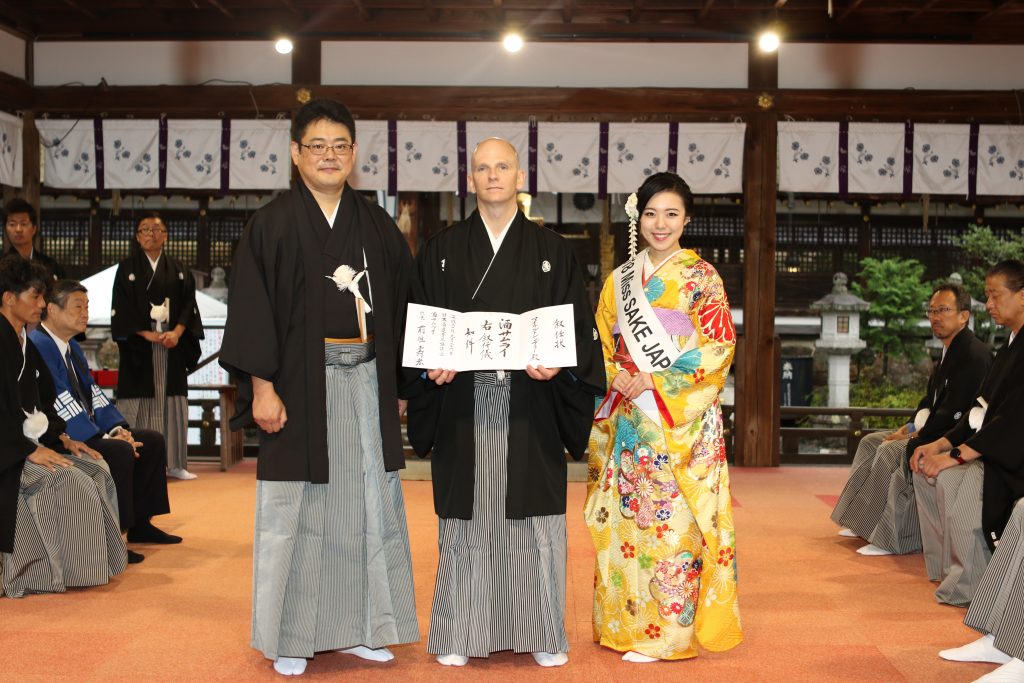
Michael Tremblay (centre) receiving his Sake Samurai certification.
You’ve now been a sake professional for twenty years or so. What have been some of the most significant industry developments during that time?
Apart from the number of sake enthusiasts growing exponentially since my early days exploring sake, I think that there are many more sakes available now than there were back in the early 2000’s. Sadly, there is still heaps of work to do with the LCBO [in Ontario] to grow availability for consumers, but restaurants can have a massive selection of offerings these days. At Ki, for instance, we have about 80 sakes on our menu, but we could easily have 200 if we wanted to.
In your mind, what have been the most positive industry trends as of late? Any negative ones?
I think the most positive trend is the rapid evolution that sake is experiencing at the moment. To give you an idea, acidity was something that was frowned upon when I discovered sake. But now, wine-like acidity in some sakes adds variety to the category. Another is how much the quality of sparkling sake has increased. You can now purchase aged ones that mimic Champagne to some degree. Lastly, there has been an explosion in Geographical Indications. There are nearly 20 now, and most are a product of the last five years. This one is still in its early stages, and there is heaps of debate about whether it’s just a marketing ploy. Personally, I think it’s great for the industry as it allows consumers to start exploring the amazing little corners of Japan that produce fantastic sake.
Tell us a bit about this move toward “regional” designations for sake.
The first GI in sake was awarded to a small region in Ishikawa Prefecture, called Hakusan GI, in 2005. The GI had its own rules governing the sake making and its ingredients that could be utilized. Think of it like the AOC regulations that govern the wines of France, but much newer, and the regulations much looser at this point. There are currently around 18 GIs from regions all over Japan. Some are large, and some are tiny with respect to the number of breweries in the geographical area.
What I love about the system is that each one talks about the history and culture behind their sake region. Some even celebrate the local cuisine of the area. The GIs are so new that it’s hard to know how they will shape sake in the future. Just think of the first AOCs in France for the wines in the Rhone valley and how many there are now that define the country’s wines. I like to imagine the same will eventually occur for sake!
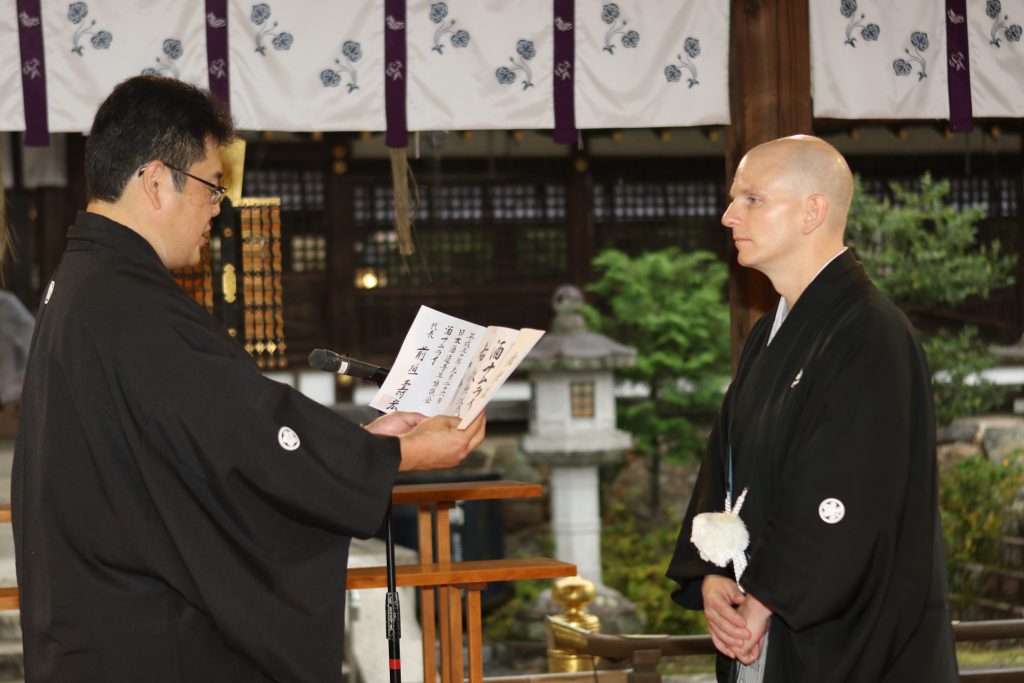
Michael Tremblay being honoured.
Some, or at least one, significant recognition has recently been bestowed on sake. What was the recognition and why was it granted? Why is this important?
In December, sake was awarded UNESCO Intangible Cultural Heritage status. This protects sake and recognizes its history and significant importance in the cultural fabric of Japan. It’s wonderful news for sake enthusiasts, and my hope is that it will intrigue those who have yet to experience it to try it.
There has been a lot of exploration, and implementation, of various yeast strains used in the fermentation of sake. Is this an ongoing practise, and what is the impact of yeast on the finished product?
Yeast impacts aromas, flavours and acidity primarily, apart from making alcohol of course. A brewer’s choice of yeast can definitely have an impact on the sake’s profile. There are still new sake yeasts being developed and explored, and it adds to the many sake profiles one can experience.
Same question with regard to the types of rice being used. Are new strains being “bred”, for lack of a better word and, if so, what is the aim of breeding new strains?
Yes, there were a few new strains developed during the pandemic, and a couple of new ones that I have heard of more recently that have been developed in response to climate change. The goal with new strains is for some regions to develop a great rice that is suitable to the natural environs of the region. In addition, Yamada Nishiki, the so-called “king” of sake rice, is used all over Japan since it is fantastic. Many regions would love to develop a sake rice that is local and can have similar attributes to Yamada Nishiki.
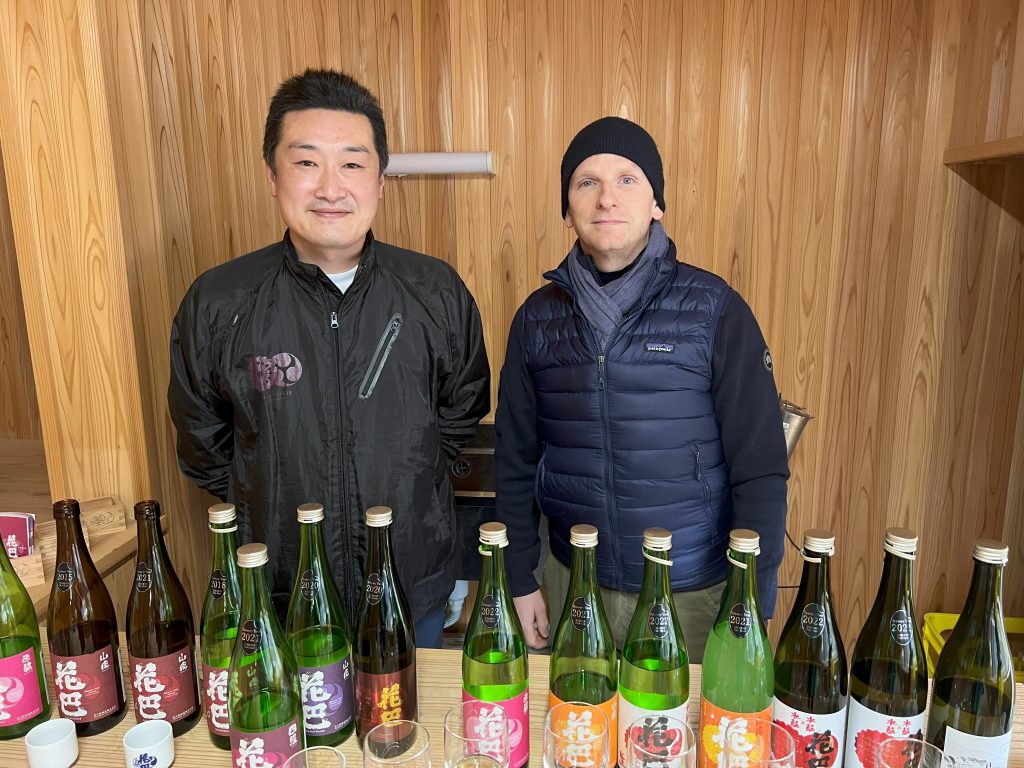
Michael Tremblay (right).
What is the difference between sake rice and table rice? Is there a movement to polish the rice less? How does the polish level affect aroma/flavour? Can you use table rice to make sake – if so, are there advantages/disadvantages?
Table rice is delicious to eat because it has more proteins and lower levels of starch. Sake rice is larger, with more starch and less protein. You can actually make mind-blowing sake with both varieties these days, as brewers know a lot more about sake making than they did even 20 years ago. Both offer advantages depending on the type of sake you want to make.
You touched on climate change. Has global temperature change affected sake production in any way? Does the quality of rice vary from year to year based on temperatures?
Global warming has affected sake making, but any noticeable impact has so far eluded the palates of consumers. Sake makers make adjustments during brewing season based on how the rice is. I think rice growers have the bigger challenge of a gradually hotter world. Yet, in some ways, sake makers today have it easier since it is more acceptable now than before to experiment and try all kinds of new – and sometimes wacky – things.
Do the sake “grades” take into account which type of rice (sake or table) is used?
No, they don’t, However, most premium sakes tend to use sake specific rice since it offers greater control when polishing. Interestingly, the prefecture of Miyagi is a specialist in making premium sake with its local table rice varieties.
Are some old production methods being revived? If so, what would be an example?
Kimoto is an old sake fermentation starter that originates in the early Edo Period (c. 1603). It’s much more labour intensive and adds a couple of weeks to the sake making but can create layers of complexity and umami-laden flavours. Some breweries are eschewing their stainless steel tanks with kioke vessels – wooden cedar fermentation tanks. These were largely replaced in the first half of the 20th century and now brewers are loving them and the sake made with them.

Tremblay says of Sake serving etiquette: “Sake isn’t fussy. Any glass or cup you prefer will do.”
Organic production, sustainability, low intervention – buzzwords in pretty much any industry these days. How is the sake industry responding to demands for more natural and sustainable practises?
I could write a dissertation on this! But for the sake of brevity, sake is made in a very natural way compared to wine. There are four principal ingredients: rice, water, koji-kin and yeast, plus an optional fifth component – brewers alcohol. Some brewers are going back to older methods of sake making – like kimoto mentioned above – that are made more naturally, and some are actively working with farmers to grow organic rice. But in the end, you don’t have to worry as much about what’s in a sake bottle compared to wine.
Insofar as sake is an alcoholic beverage, what makes sake a particularly “healthy” one?
Apart from the alcohol in sake, which for obvious reasons can have a negative impact on your health, sake has healthy attributes. When sake is produced, and the starch in the rice is broken down into fermentable sugars, the proteins that surround the rice’s starch heart are broken down into peptides and amino acids. In fact, there are more than 20 amino acids in sake, and some are linked to positive impacts in health studies. These amino acids can be healing. It’s one reason sake is used in face masks and sake baths.
Can all sakes be served at a variety of temperatures, or do some styles have optimal serving temperatures?
Generally, the sakes that are suitable for a variety of temperatures are those where more of the rice was left on during sake making. A milling rate of 70 per cent or higher can be a good benchmark, however there are some with a lower rate that can be great when warmed. The higher grades of sake like Junmai Daiginjo and Junmai Ginjo depend on the removal of more of the rice. These are best served chilled, as you will lose some of the aromas when warming. Going back to the 70 per cent milling rate, and to grades such as Honjozo and Junmai; these tend to have less fruity and floral aromas, and more body and umami on the palate. These can be delicious chilled, but when you warm them, you can really bring out some delicious flavours, acidity, body and umami.
Let’s talk about sake and food pairing. Broadly speaking, do certain styles of sake tend to work better with certain types of food?
There is a saying in Japan that “sake does not pick fights with food.” Except for some of the more esoteric sakes out there, most are a safe bet with many types of food. And not just Japanese.
“What grows together, goes together.” Is this true for sake (ie., if a certain region is more inland, and another is more coastal, does the style of sake produced in these regions tend to be stylistically crafter to match the regional dishes)?
Historically, I think this was the case, and to some degree there is still a connection with regional foods and regional sakes, like regional Italian wines and their respective foods. But, particularly with a lot of the Ginjo / Daiginjo sakes produced today, these are more or less designed for export markets or larger cities like Tokyo. There is a stronger regionality with sake profile and food connections with the “lower” grades on the sake pyramid, like Futsu, Honjozo, and Junmai.
Could a single sake pair well with different dishes simply by altering the serving temperature?
Absolutely! At Ki, we love to explore and coax different facets out of the same sake. In addition, a lot of our dishes are brought out sharing style into the middle of the table where you are trying many flavours at once. Sake tends to have a chameleon-like effect when being enjoyed with a myriad of flavours and seamlessly works with everything.
What are sake bottle sizes based on? They don’t typically match other bottle sizes?
Good question! Most bottles that are similar to a wine bottle are in fact 720ml rather 750ml. This has a historical connection to the masu, a little wooden box that was used in the past to measure rice and other Japanese goods. The box is 180ml. If you multiply this by four times you get 720ml! The ‘magnum’ size of a sake bottle is 1.8 litres, or 10 masus. Even the brewing production volume of a sake brewery is connected to this number, as most talk about their volume of production in terms of koku or 180L.
What is the ideal glass for enjoying, rather than assessing or judging, sake?
Any glass or cup you prefer will do. Sake isn’t fussy.
Once a bottle is opened, how long can it stay open and how is it best kept fresh during this time?
Sake is very forgiving in comparison to wine. Generally, keep an aromatic type of sake open for up to a week and a half, and a non-aromatic type of sake for three weeks if not more, depending on the sake.
With sake, is it a case of fresher is better, or are there exceptions?
Generally, when a brewery releases their sake, they are suggesting you drink it soon. So, fresher is definitely better, especially for aromatic Ginjo or Daiginjo sakes. With that said, if you like umami, aging sake can be quite fun. Aged sake is called Koshu and can be very complex and savoury.
Numbers suggest that sake is gaining popularity worldwide. How do you account for this? Better product? Better marketing? An audience more willing to try something new? A combination of all of these?
It’s a multi-faceted approach, I think. First, Japanese food has been extremely popular around the world for more than a decade. Sake is riding the wave. In addition, more and more wine sommeliers are realizing how versatile and food friendly sake is, and are adding to their arsenal of knowledge and bringing sake into their restaurants to experiment with.
Another facet is how Futsu-shu, or ordinary non-premium sake, has declined drastically in volume of production in favour of premium sake production, and these have become very popular all over the world. And lastly, there has been an explosion of international sake breweries. In North America there are more than 30 for instance! This has helped attract consumers in some markets to try their “local” sake, then fall in love with it and start to explore Japanese sake.
[Tremblay notes that there are currently three sake breweries operating in Canada: one each in Quebec, Ontario, and British Columbia.]
Sake names can still be intimidating for North American consumers. Is there any for consumers to simplify the selection process or is it just a matter of them educating themselves?
In short, if more of the rice is used – say a 70 to 80 per cent polish ratio – the sake will be more “ricey.” If you see a percentage or rice polish rate on the label that is below 60 per cent, there’s a good chance is will be less ricey and more fruity and/or floral.
Is there a “craft sake” movement happening in Japan? If so, what defines it?
Generally, most breweries have become more “craft” orientated in recent years, in my opinion. Many breweries were historically oke-uri producers; essentially barrel selling breweries that made large amounts of generic sake to sell to the large national brands. Nowadays many of these breweries have shifted from quantity to quality and are making great sakes.
Historically, sake brewing has been very much a male-dominated industry. This has been changing for some time. Where are we now?
Well, the industry is still dominated by men, but there are many – very many – amazing women who are changing the perception that only men can make sake. They are becoming role models to many women, and showing that they can make phenomenal sake and be leaders in the industry. I am not sure how many women brewers there are at this time, but I feel like it is more than when I entered that sake industry. Some of the top producers are Okazaki Shuzo (Shinshu Kirei), Moriki Shuzo (Rumikonosake), Imada Shuzo (Fukucho), and Tsuji Honten (Gozenshu).
– Tod Stewart is senior editor with VineRoutes and has acted as a judge for the Toronto International Sake Challenge