


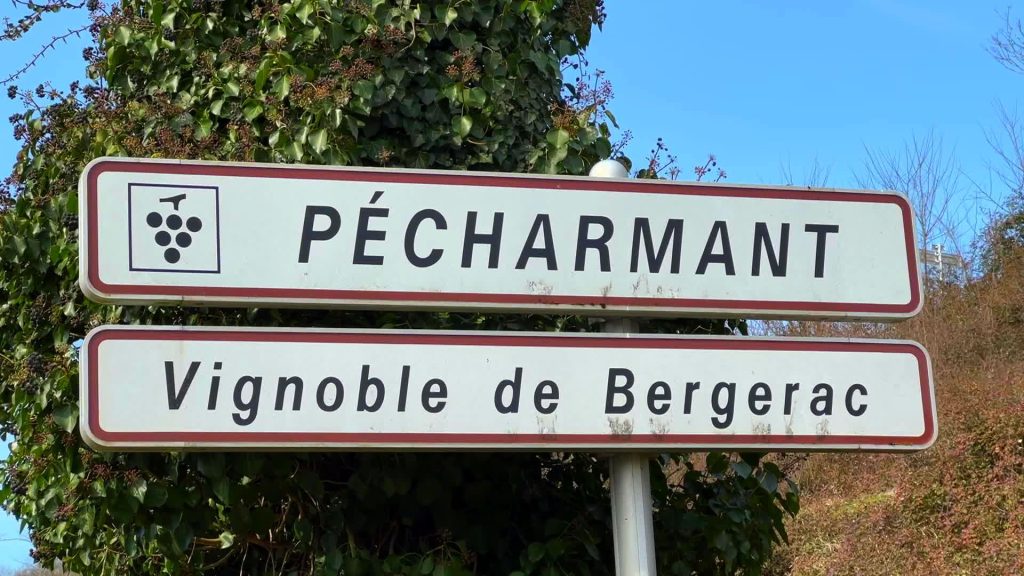
A little-known wine region with prehistoric roots producing Bordeaux-style blends in Pomerol-type soils at incredible value
I have a confession to make. I wasn’t sure I wanted to tell you about Pécharmant. For the past 30+ years I have been, to borrow the Gen Z parlance, gatekeeping, the magic of this little-known appellation in the Bergerac wine region of southwestern France.
By some accounts, France’s south-west region may be the least-known in the country, in no small part due to a modicum of overshadowing by its big brother immediately to the north-west. You may have heard of him—Bordeaux.
But I have not spent almost every summer since I was born in Bordeaux. I’ve spent them in the quiet, rural embrace of the Dordogne, an enchanting département about two hours’ drive east, known as the land of a thousand castles.
Read Also: Exploring Côtes-du-Rhône: France’s most versatile wine region
Much of my cultural coming-of-age took place during those summers, gathered in the garden with family and friends around a once-white plastic table and chairs, permanently mottled with the age spots of the walnut tree’s seasonal offerings, in the shadow of the leaning gable of our 13th-century farmhouse. Lazy afternoons were spent with plates of oven-warmed baguette, gooey rounds of Cabécou (a local goat’s cheese), freshly cracked walnuts, and ever-filled tumblers of Pécharmant, rarely more than €8-10 (now perhaps €12-15) a bottle from the supermarket.
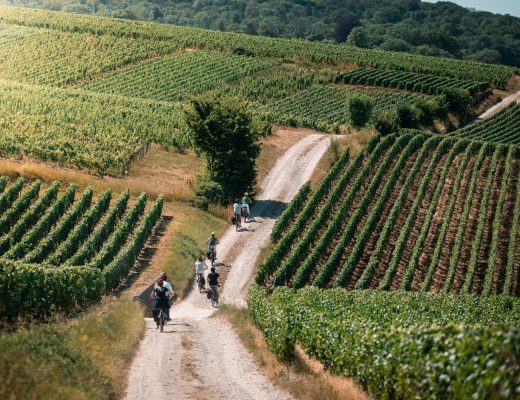
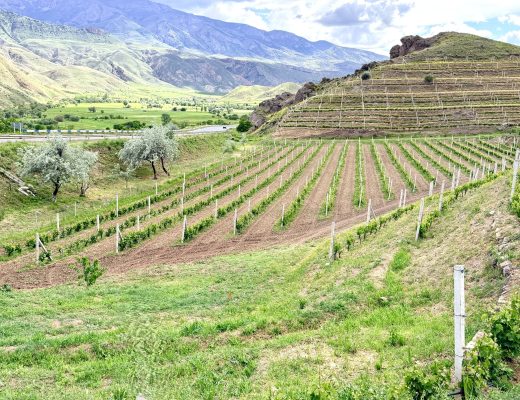
Some things have changed. Today we visit boutique wine shop Julien de Savignac, which specializes in curating the best and most interesting bottles (€15-30) from Pécharmant and the larger Bergerac region. We make more day trips to visit the vineyards themselves—leafy rows fanning out from rustic farms and historic châteaux—to set foot on the sandy-gravelly clay-limestone terroir dotted with flint (more on that later) that gives these grapes their distinctive character.
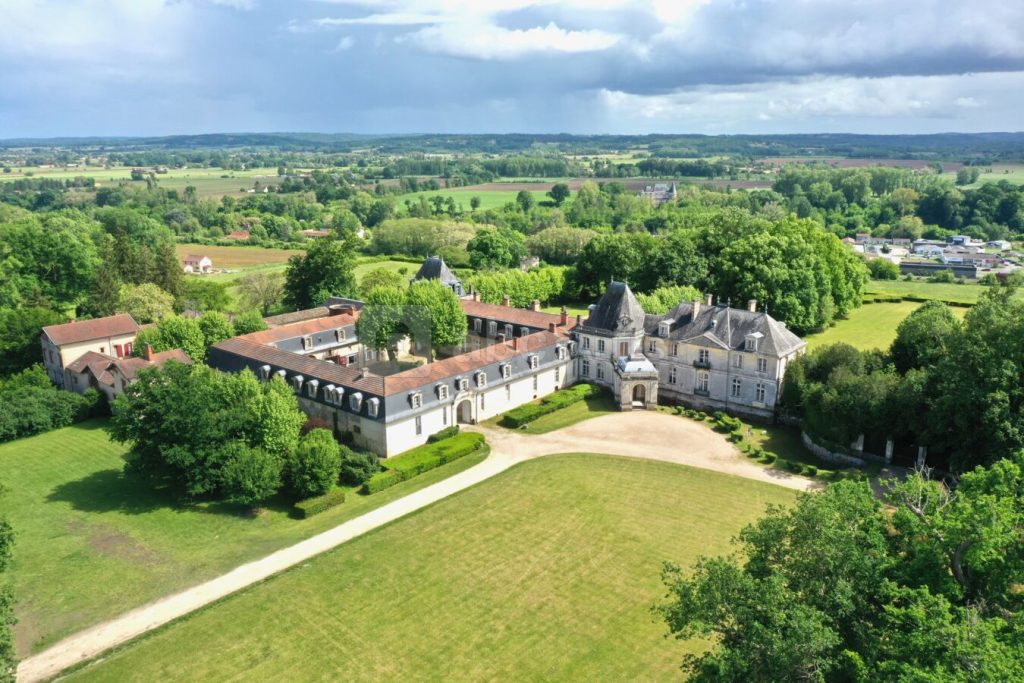
Chateau de Tiregand
In the intervening years, some Pécharmants have been mistaken for Bordeauxs in blind taste tests. Indeed, those prized, rare blue clay soils of Pomerols like Petrus can be found in Pécharmant too. So great are the similarities—the Atlantic-influenced climate, the soils, the varietals and the winemaking styles—that some even go so far as to call Pécharmant the beginning of the right bank.
But much remains the same. We still enjoy our meals around that once-white table under the leaning gable, clinking our glasses with a changing set of faces. My French is still terrible. But there’s an unspoken understanding, not just for the big, characterful red stuff in the glass, but for how it should be enjoyed. Sure, they may rival many Bordeaux bottles in terms of quality, and far outstrip them in terms of value, but for many of the multi-generational winemaking families of Pécharmant, the point of it all isn’t to hook the highest bidders or have their labels displayed like trophies in the dusty, lonely cellars of collectors. Oddly enough, the point is to drink them. And simply, to enjoy drinking them together with others.
Pécharmant’s prehistoric terroir
Pécharmant, the “charming hill” to the north of Bergerac on the right bank of the Dordogne river, is home to a cozy 45 producers cultivating 450 hectares of land into about 2 million bottles per year. It’s the oldest viticultural area in the region, first cultivated by monks in the 11th century. Its iron-rich terroir contains sand and gravel deposits from the granite and limestone of the Massif Central, carried downstream and sown along the banks. But it’s the rare blue clay—the same you’ll find in Pomerol—and prehistoric flint that tell a deeper story.
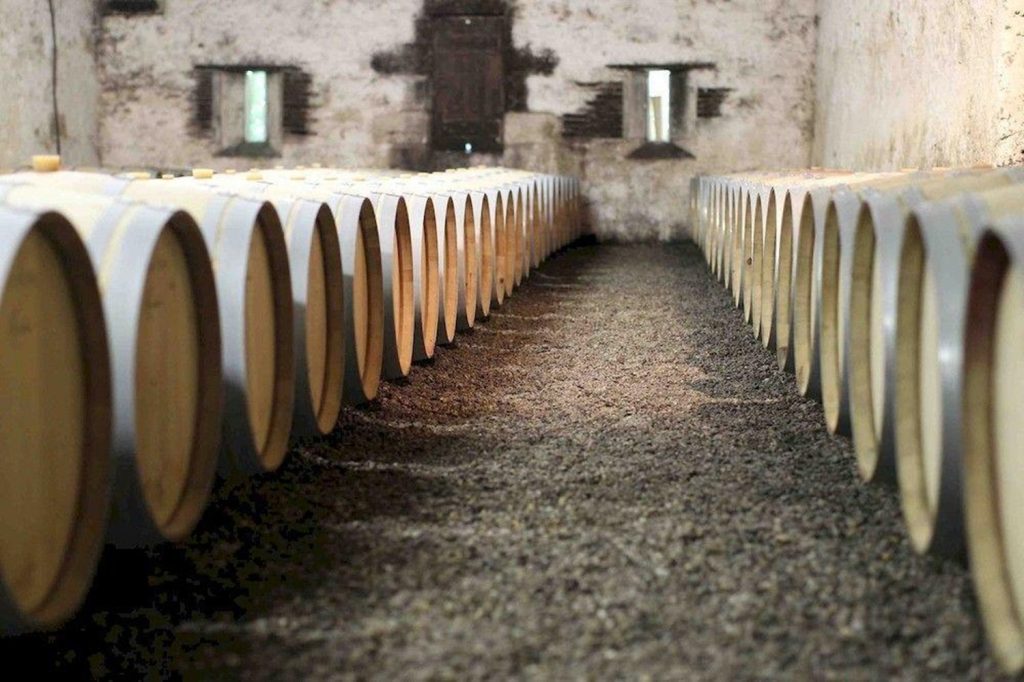
Château Les Farcies du Pech.
Several Pécharmant vineyards are peppered with fragments of prehistoric flint; artifacts like spear tips and handaxes, some of the first stone tools used by early humans. Little did they know their tools of survival would contribute one of the most extraordinary characteristics of this soil a whopping 350,000 years or more before the genesis of winemaking. Indeed these brooding, inky reds have been described as having a distinct minerality, a depth and complexity to their boldness, and a robust tannic backbone ideal for aging.
After a few with your confit de canard, if you lean back and gaze off over the hills, you can almost spot Cro-Magnon himself, spear planted, sentry to a noble land worth defending.
Wineries worth visiting
Domaine du Haut Pécharmant
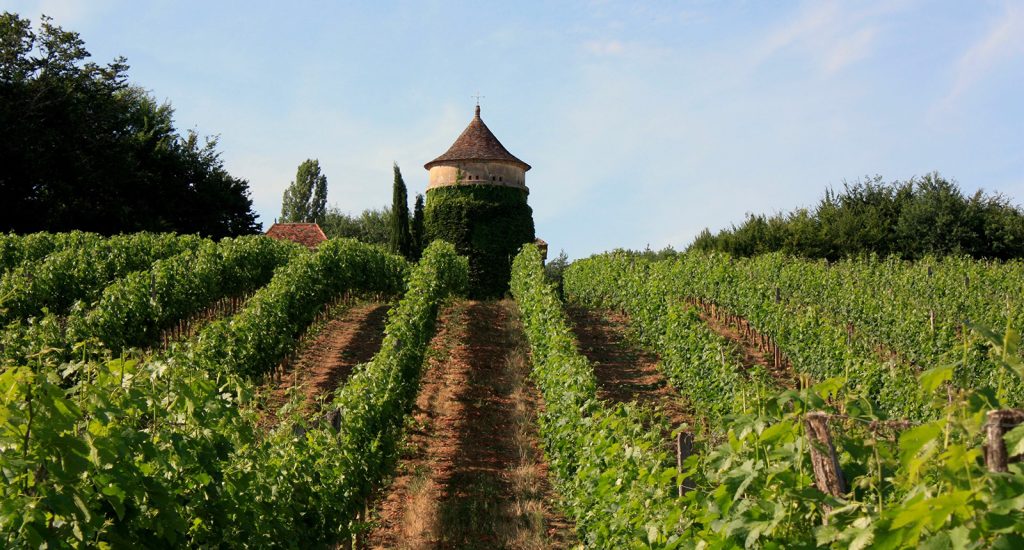
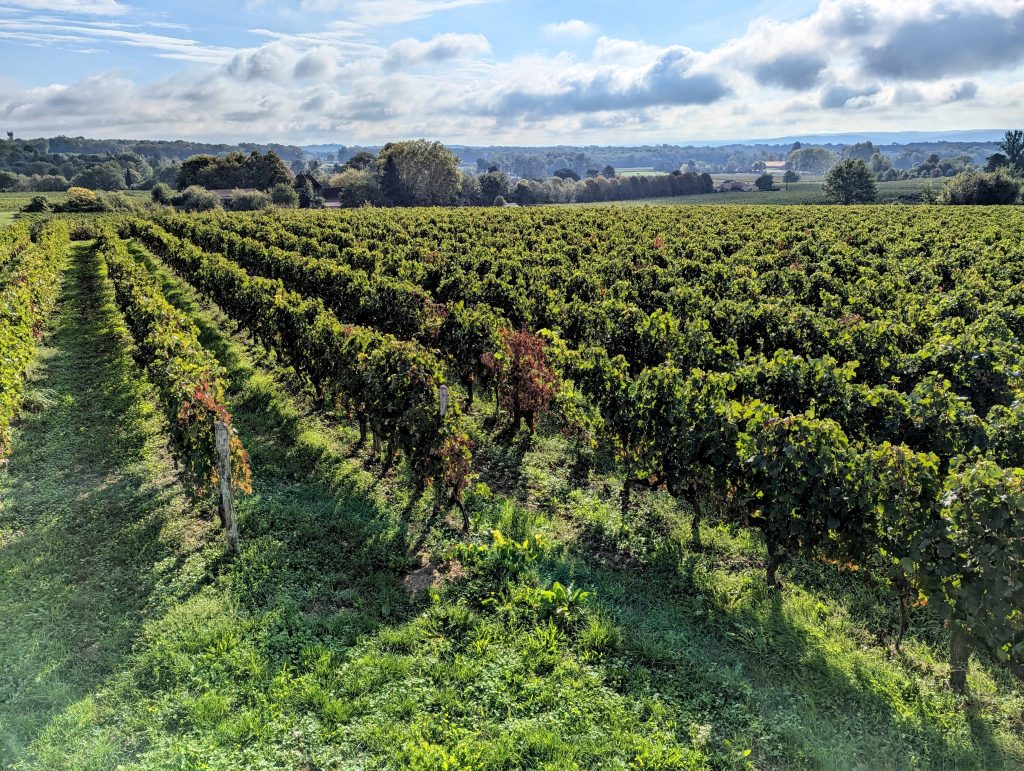
Round the corner to this chalky limestone farmhouse at harvest time and you’ll find a quiet beehive of activity as a gentle giant jiggles sun-ripen grapes off the vines row by row. Fifth-generation winemaker Didier Roches presides over a gently sloping, south-facing vineyard of Cabernet Sauvignon, Cabernet Franc, Merlot and Malbec, with vines ranging from 10 to 60 years old. His family has cultivated this land since 1929. Both Didier and his wines retain that rustic homegrown charm that makes this region so characterful.
Courtesy of Nicola Brown
A predilection for natural winemaking—a buzzworthy term today—has been de rigueur in Pécharmant for generations, with many vintners employing sustainable practices like alternate-row grassing. In 2020, Didier took it one step further, installing his own water treatment plant on the property, and is currently participating in a region-wide hedge-planting project to maintain the biodiversity that’s been a core strength of the area’s small-scale farming tapestry.
Armed with a small binder of knowledge in English or French, take your nerdiest travelling companion on a self-guided tour through the vines to the top of the hill. Scale the ruins of a stone turret at the top for some contemplative views across the vineyards before descending into the barrel cellars to find a veritable museum of both winemaking and prehistoric artifacts.
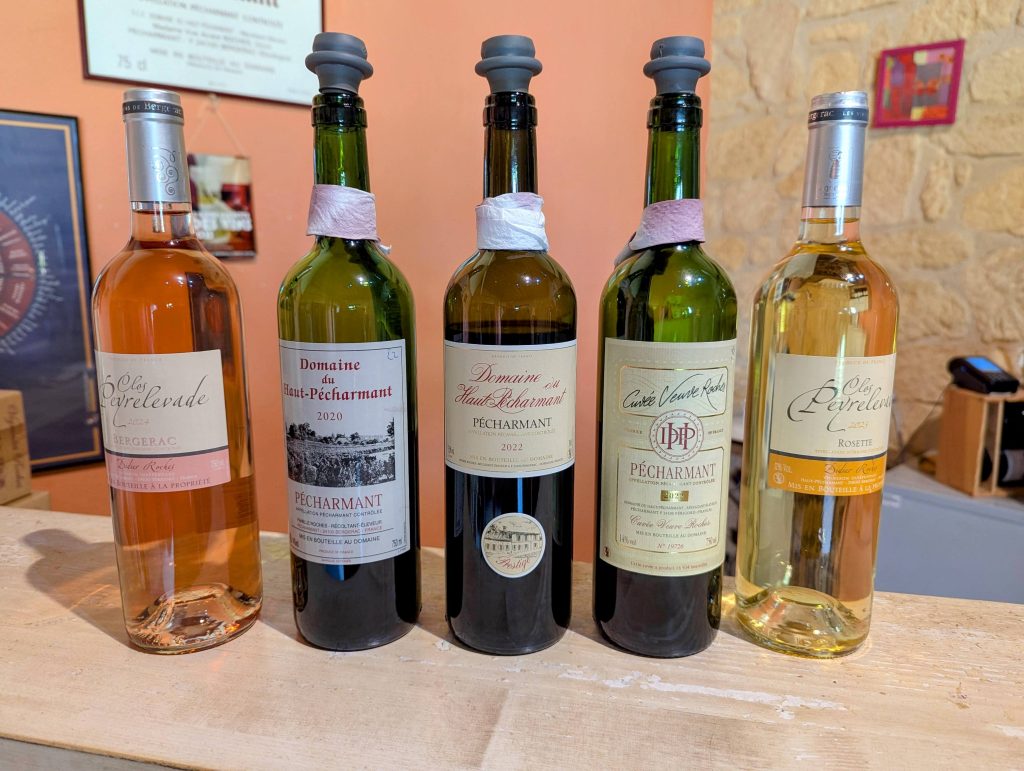
What to drink: For a typical taste of Pécharmant’s rustic roots, the Domaine du Haut Pécharmant from 2020 showcases a solid year that drinks well now, especially when paired with any of the region’s rich local dishes meant for sharing round the table, like a hearty cassoulet with sausage and duck. For a step up, the Cuvée Veuve Roches 2022, named for Didier’s enterprising grandmother, is an even smoother homage with great aging potential.
When you go: Group visits can be made by appointment and guided tours are available in July and August on Tuesdays at 2:30pm and Thursdays and Saturdays at 10:30am.
Château Terre Vieille
Château Terre Vieille is among the most beautiful winemaking properties in the region, with a cozy reception for guided wine tastings housed in a charming estate once home to philosopher Maine de Biran. The collection of buildings has been meticulously renovated using local craftsmanship and regional materials by the vineyard’s 1989 founder Gérôme Morand-Monteil to restore and celebrate the authentic 17th and 18th-century architectural heritage. An idyllic setting for a spot of reflection. Glass in hand, wander off to take advantage of a plenitude of alfresco seating dotted around the property, from plush armchairs to sunny loungers.
Chateau Terre Vieille
Today the family winery is run by the Morand-Monteils’ son Pierre and wife Fleur, and the grounds are replete with family-oriented activities like swing sets, tiny ride-on tractors, a friendly cockerspaniel named Septaoût, and even a boules court. “I really like the way we drink wine in this area,” says Fleur. “Sometimes you meet people who have big cellars but you can tell they don’t drink their wine. There are those who like their labels, and there are people like us. Bon vivants.” This is Périgord, she reminds me, enjoying good food and drink is in the DNA. The castles, the landscapes, the truffles. Treasures of an appellation Pierre would prefer to keep secret lest an influx of visitors should bring about its demise. A counterintuitive position for a winemaker and business owner, perhaps. But pay the region a visit and you’ll find it quite apt.
What to drink: Château Terre Vieille 2020 is the property’s flagship wine from a standout year, a blend of 60% merlot, 20% cabernet franc, and 20% cabernet sauvignon, aged for 12 months in oak barrels. Blackcurrant, raspberry, black cherry and smoke on the nose become candied fruit and prune on the tongue owing to the prevalence of merlot. For an even longer finish and a velvety smoothness, the Terre Vieille l’Ambroisie 2020 kicks the powerful character of the region’s most cellarable bottles up a notch.
When you go: Drop in for a tasting, book a food and wine pairing, or reserve your spot for a lunch of local and regional dishes. In July and August, try their Périgord-style tapas experience with platters of small bites available to enjoy alongside your wine.
Château Beauportail
In a rare twist—and at the risk of stating the obvious—winemaker Stefan Niedojadlo doesn’t come from a French winemaking lineage. A midlife crisis brought the former engineer and his brood from none other than Niagara, Canada, to this tiny enclave. After a smattering of vacations to different wine producing regions around the country, his decision to buy Château Beauportail followed an organized blind tasting with a panel of enthusiast friends in Ontario and a pallet of wines imported from 40 different producers.
Château Beauportail (Courtesy of Nicola Brown).
The top four? All Pécharmants. Château Beauportail in first. The resounding clean sweep convinced Stefan to uproot it all and start a new life here in “wine engineering” as he fondly calls it. He’s spent the ensuing 6 years refining the winery’s existing potential through equipment and vehicle upgrades including a €16,000 pump to reduce the introduction of oxygen. In his judgment, the product you start with—those Pécharmant-grown grapes and their juice—is perfect. While the steps you use to process those grapes can degrade it, depending on the degree to which you control and invest in doing it as flawlessly as possible.
Along with nerding out about practices with fancy names like manual pigeage, visitors can expect a warm, rough-and-ready reception amongst the tanks of Stefan’s workshop where he tinkers and tweaks, to taste some of the most finessed expressions of Pécharmant you’ll come across. Six years on, those early vintages are coming into their own in a way that drums up some serious excitement for what he’s bottling now, and what he might be capable of over the next 5-10 years.
What to drink: Head straight for the Quintessence de Beauportail 2020, a mix of 60% cabernet sauvignon, 35% cabernet franc, 20% merlot and 5% malbec, aged for 16 months in new French and—in a patriotic nod—Canadian oak. To Stefan’s knowledge he’s the only producer in France importing and aging wine in Canadian oak barrels. One could argue their relatively slower growing, super fine grain imparts, if not a certain je ne sais quoi, then at least a playful bit of underdog flair. “Isn’t it interesting how all the best appellations start with a P,” says Stefan. “Pomerol, Priorat, Pécharmant…”
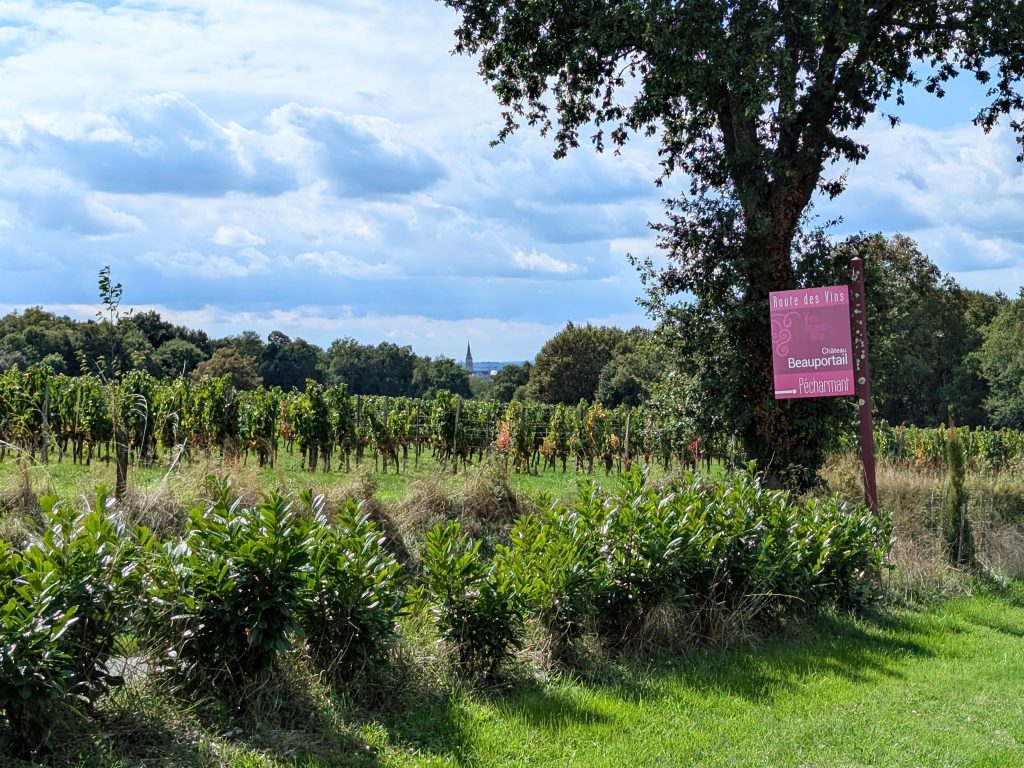
When you go: Take a moment to soak in the rural setting with Bergerac’s medieval church steeple in the distance and ask yourself: should I move here too?
Château de Tiregand
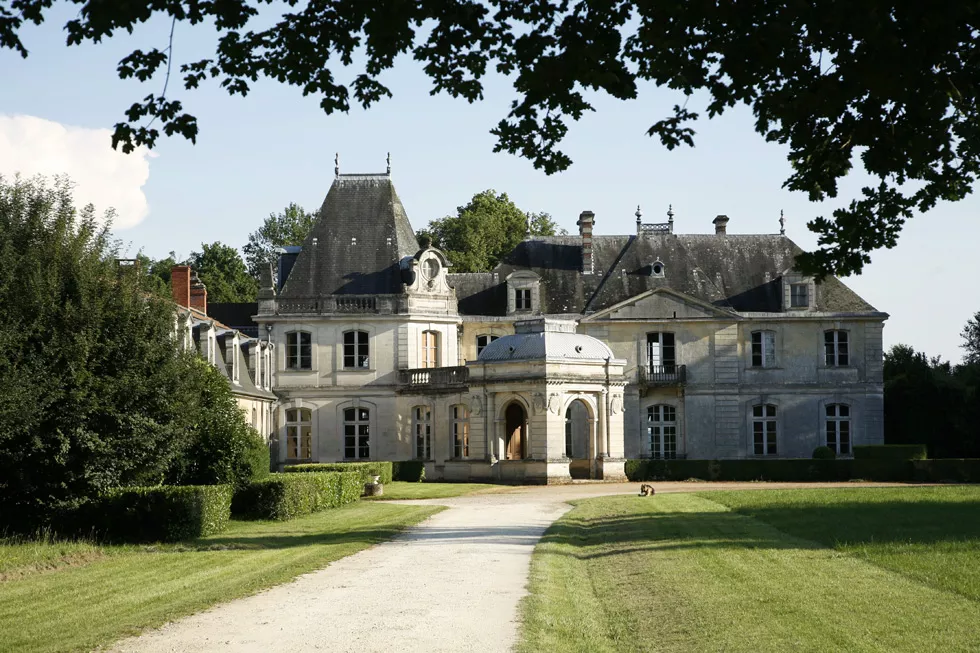
Founded in the 13th century by Edward Tyrgan, son of Henry III of England, then rebuilt in the 17th and embellished in the 19th century, this classic château is typical of the casual abundance of stunning châteaux throughout the region, made all the more attractive by their venerable wine production. Local boutique wine shop Julien de Savignac usually has the latest vintage uncorked at their complimentary tasting bar, to showcase one of the best representations of a classic Pécharmant you can find.
Chateau de Tiregand.
Bottles of Château de Tiregand have been a staple around our once-white table for years. A reliable friend that’s neither too rustic nor too snooty, a perfect pour for almost every occasion, just as familiar with the lunchtime omelettes aux cèpes as the dinnertime foie gras mi-cuit. But lay it flat for a while, (forget that it’s there), uncork it 7 years later and be prepared to do a double-take. Then lament the fact you only stuffed two bottles in your suitcase.
What to drink: Every visitor to the Dordogne region should pick up a bottle of Château de Tiregand 2022, while you still can. It’s one of the best value bottles in the region. Long and complex with well-integrated tannins, this is a wine for aging, if you can resist the urge to drink it sooner.
When you go: Drop in for a tasting or book one online. Choose the “privilege” option for a few euros more—you don’t want to miss the Grand Millésime. Add fromages or chocolat to pair, if you like.
Château Barouillet
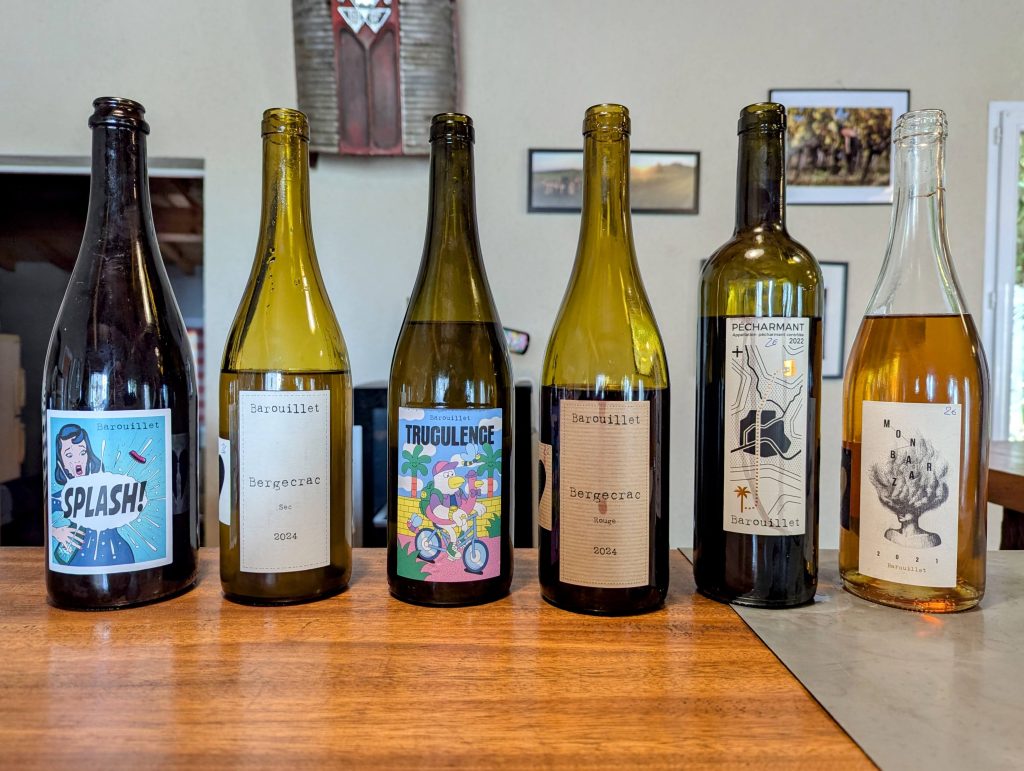
It turns out you don’t have to be an outsider to flip the script on this region’s winemaking potential. Just south of Pécharmant in Monbazillac, another Bergerac appellation known for its sweet white wines, Château Barouillet is bucking the quiet-rural-producer trend from within. Vincent Alexis, an 8th-generation vignerons, has been working alongside his father and grandfather to slowly convert their vineyards to organic, then biodynamic, over the past 15 years. With a plot in Pécharmant and two more in Monbazillac, the winery grows over 20 different varietals, including a rare indigenous grape called Mérille. Vincent is one of a small handful of producers attempting to reintroduce the largely forgotten grape to preserve the region’s winemaking heritage and seek solutions for adapting to climate change.
Courtesy of Nicola Brown
Vincent’s approach may be unconventional, but bending France’s strict winemaking rules can sometimes yield eye-opening results. Despite “downgrading” from an AOC to a Vin de France, growing demand for low-intervention natural wines has boosted their business in France and internationally. Head to your local wine shop in Toronto and you may just spot the popart label of a bottle of Splash!, their natural sparkling Semillon.
What to drink: The Pécharmant 2022 is a delicate take on the region’s typically bold, full-bodied reds. Sure, this unoaked version is not quite a traditional Pécharmant, but it’s an honest expression of the terroir, and it’s really quite good in its own right. Don’t miss a whole lineup of other innovative wines, like the Bergercrac 2024, a Bordeaux-esque blend with the addition of that Mérille grape, another surprisingly light take on a heavy classic—no small feat.
When you go: Drop in for a tasting Monday to Saturday between 9am and 6pm, and check their Instagram @instarouillet for special events.
Look out for other notable names worth ordering on restaurant menus: Château Les Farcies du Pech turns out velvety smooth, incredibly consistent, award-winning Pécharmants from an impeccably kept 16th century estate. When in doubt, ask your sommelier to point you in the right direction for local bottles worth trying.
Tourist office and library-esque tasting room Quai Cyrano in Bergerac is a great starting point for getting your regional bearings. It’s housed in a 17th-century Francescan convent surrounding an impressive cloister worth visiting for its architectural elegance alone. In addition to their buyable catalog of 160 wines from across the Bergerac-Duras appellation, you can try a weekly rotation of nine exciting picks from punchy Pécharmants to sweet Saussignacs, and decide where your loyalties lie.
Domaine du Haut Pecharmant (Courtesy of Nicola Brown)
With pop-up tastings from a different small-scale producer every day in summer, there’s always something new to discover, and the privilege of meeting the region’s winemakers face to face. Wine advisor Damien Vincent has a soft spot for Pécharmants. “I live in Pécharmant, so it’s the soil under my feet. I love these red, French oaked wines. I just like to drink nice wine from nice people,” he says, emphasizing the importance of a genuinely warm welcome to the enjoyment of any wine.
“People want authenticity,” echoes Didier. “This is what Pécharmant is. Independent producers, characterful expressions.”
For all its parallels with Bordeaux, in one important regard Pécharmant sits at a refreshing distance. This region’s wine is mostly enjoyed right here, by local families, restaurateurs, retailers and holidaymakers. Only a small fraction makes it beyond French borders.
As Bordeaux’s nail-biting execs ride the tempestuous jolts of global upheaval—namely tariffs and waning Chinese demand—Pécharmant’s crinkly-eyed farmers top up their tumblers. In this land of prehistoric provenance, medieval castles, rich culinary traditions and rural humility, they know what they’ve got is special. What more could one need?